Hormone replacement therapy (HRT), specifically oestrogen supplementation, has been clinically shown to significantly mitigate and partially reverse the structural changes associated with menopausal skin ageing. Research indicates that systemic and topical oestrogens increase skin thickness by promoting the synthesis of Type I and III collagen and improving the water-holding capacity of the dermis through increased glycosaminoglycan production [1]. Within the first five years of menopause, women typically experience a 30% reduction in skin collagen; however, HRT can effectively halt this precipitous decline and, in some cases, restore dermal volume and elasticity [2].
While HRT is highly effective at improving hydration and epidermal thickness, its ability to completely 'reverse' deep-set wrinkles or solar elastosis (sun damage) is limited. The therapy acts more as a biological restorer of the skin's structural integrity rather than a cosmetic eraser of past environmental damage. Clinical studies have demonstrated that patients on HRT exhibit higher sebum production and improved skin barrier function compared to those not receiving treatment, leading to a visible reduction in fine lines and a more resilient complexion [3].
The skin is a classic oestrogen-responsive organ, containing high densities of oestrogen receptors (ERα and ERβ) within the fibroblasts, melanocytes, and hair follicles. During the perimenopausal transition, the decline in circulating oestradiol leads to a decrease in TGF-β signalling, which is crucial for collagen homeostasis. This biochemical shift results in a thinner epidermis and a fragmented dermal matrix, manifesting as the characteristic 'crepey' texture associated with hormonal ageing [1][4].
Beyond collagen synthesis, oestrogens play a critical role in wound healing and vascularity. They influence the expression of vascular endothelial growth factor (VEGF), which maintains healthy blood flow to the skin's surface. By preserving the microvasculature, HRT ensures that essential nutrients and oxygen reach the dermal-epidermal junction, thereby supporting the metabolic activities required for cellular renewal and structural repair [5].
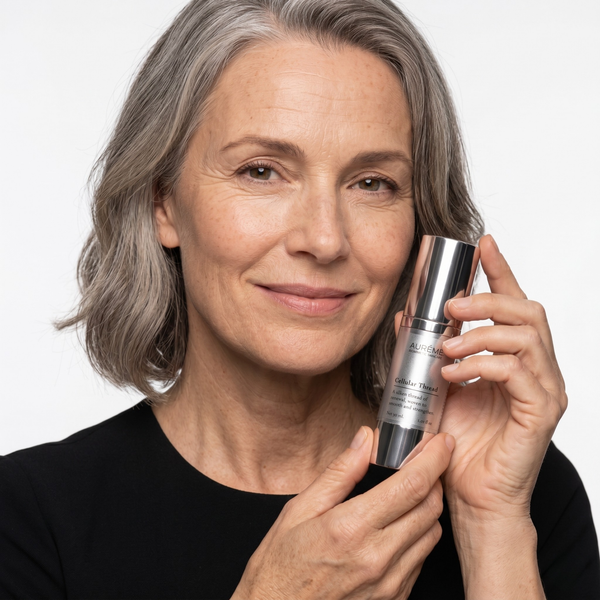
While systemic treatments address these structural changes from within, many of our customers have found that supporting the skin’s surface with a specialised peptide replenishment can further enhance the appearance of firmness and luminosity. If you are exploring ways to maintain skin longevity during this transition, our Cellular Thread peptide treatment serum and its companion Cellular Crème were formulated with a proprietary peptide complex to support the dermis and preserve the suppleness that oestrogen loss often compromises.
FAQ
How long does it take to see skin improvements while on HRT?
Measurable changes in skin hydration and barrier function can often be observed within 3 to 6 months of initiating HRT. However, significant increases in dermal collagen density and epidermal thickness typically require 6 to 12 months of consistent therapy to become clinically visible [2][6].
Does topical oestrogen cream work as well as systemic HRT for skin?
Topical oestriol or oestradiol creams can be highly effective for localised skin rejuvenation without the systemic levels associated with oral or transdermal patches. Studies show that topical application directly increases hydroxyproline levels and improves skin elasticity in postmenopausal women, though it lacks the broader systemic health benefits of standard HRT [1][3].
Can HRT help with menopausal acne or dry skin?
Yes, HRT can help balance the relative androgen dominance that occurs during menopause, which is often responsible for adult acne. Additionally, by increasing the production of hyaluronic acid and acid mucopolysaccharides in the dermis, HRT significantly alleviates the chronic dryness and pruritus (itching) frequently reported by menopausal patients [4][5].
References:
[1] Stevenson S, Thornton J. Effects of estrogens on skin aging and the potential role of SERMs. Clin Interv Aging. 2007;2(3):283-297. doi:10.2147/cia.s798
[2] Brincat MP, et al. Estrogens and the skin. Climacteric. 2005;8(2):110-123. doi:10.1080/13697130500118086
[3] Calleja-Agius J, et al. The effect of menopause on the skin and atrophic changes. Post Reprod Health. 2015;21(4):138-144. doi:10.1177/2053369115602602
[4] Wilkinson HN, Hardman MJ. A role for estrogen in mediating skin aging and wound healing. Aging Cell. 2017;16(6):1228-1235. doi:10.1111/acel.12662
[5] Lephart ED, Naftolin F. Menopause and the Skin: Old Favorites and New Innovations in Cosmeceuticals for Estrogen-Deficient Skin. Dermatol Ther (Heidelb). 2021;11(1):53-69. doi:10.1007/s13555-020-00468-y
[6] Duffy F, et al. The role of hormone replacement therapy in skin orthobiology. Journal of Dermatological Science. 2019;94(2):201-209. doi:10.1016/j.jdermsci.2019.03.004
Medical Disclaimer: This article is for educational purposes only and does not constitute medical advice. Always consult a qualified healthcare professional before starting any new skincare regimen. Content reviewed by a biomedical scientist.