Air conditioning and indoor heating systems drive skin dehydration primarily by creating a steep vapour pressure gradient between the skin surface and the surrounding atmosphere. These systems significantly lower the ambient relative humidity (RH), often dropping it below the critical 40% threshold required for skin homeostasis [1]. When indoor air is dry, water is drawn out from the stratum corneum through a process known as Transepidermal Water Loss (TEWL). This environmental stressor causes the corneocytes to shrink and become brittle, leading to the formation of micro-cracks in the lipid bilayer that constitutes the skin's primary protective shield [2].
Furthermore, the forced air from these systems accelerates the evaporation of the hydrolipidic film, a delicate emulsion of sebum and sweat that sits atop the skin. In the context of an Australian winter, where outdoor air is already crisp and low in moisture, the constant transition between cold outdoor environments and heated indoor spaces causes rapid capillary constriction and dilation [3]. This thermoregulatory stress interferes with the synthesis of essential lipids like ceramides and cholesterol, which are vital for maintaining a resilient barrier, eventually leading to the characteristic 'winter itch' or xerosis [1][4].
The skin barrier, or stratum corneum, functions as a biosensor that responds dynamically to atmospheric changes. Under optimal conditions, the skin maintains a high concentration of Natural Moisturising Factors (NMFs), which are humectant molecules like amino acids and urea that bind water [5]. However, prolonged exposure to low-humidity environments created by artificial climate control inhibits the enzymes responsible for processing filaggrin into these NMFs, resulting in a physically less flexible and more reactive skin surface [2].
From a biochemical perspective, the 'brick and mortar' model of the skin is compromised when indoor heating disrupts the enzymatic activities required for lipid processing. Cold, dry air can decrease the activity of acid sphingomyelinase and beta-glucocerebrosidase, the enzymes that generate the ceramides necessary for barrier integrity [4]. Without these lipids, the skin cannot effectively retain moisture, regardless of how much water is consumed internally, necessitating the use of exogenous occlusive and emollient formulations to restore equilibrium [6].
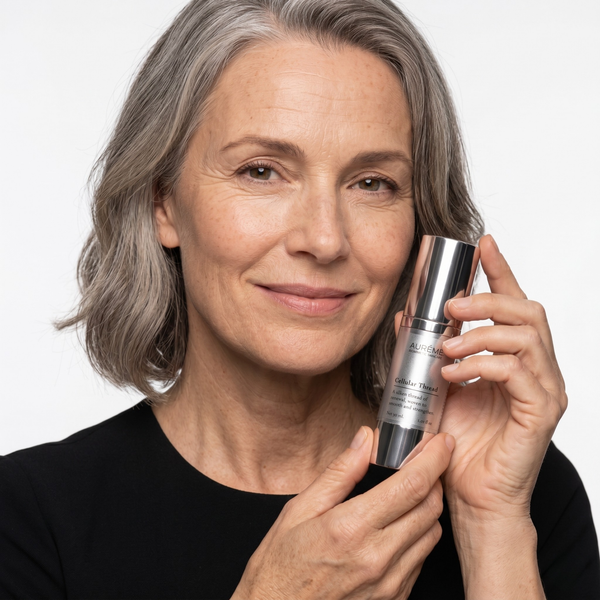
To help mitigate this environmental stress, many of our clients turn to the Cellular Crème, a rich peptide moisturiser formulated with Sodium Hyaluronate and Shea Butter to seal the skin barrier against moisture evaporation. For those seeking to support their natural microbial defence during these fluctuations in humidity, the Balance Biome Crème offers a specialised blend of Bifida Ferment Lysate and Niacinamide to foster resilience and maintain a balanced complexion.
FAQ
Does using a humidifier indoors actually help the skin barrier?
Yes, increasing the ambient relative humidity to between 40% and 60% can significantly reduce the rate of TEWL. By narrowing the vapour pressure gradient between the skin and the air, a humidifier allows the stratum corneum to retain its internal moisture more effectively, supporting the enzymatic processes required for barrier repair [1][5].
Why does my skin feel tighter after sitting near a heater?
Direct exposure to infrared heat or forced warm air increases the skin's surface temperature, which temporarily liquefies some of the skin's surface lipids and accelerates evaporation. This sudden loss of moisture leads to immediate contraction of the corneocytes, manifesting as a sensation of 'tightness' or discomfort [3][4].
Should I change my moisturiser for the Australian winter?
Evidence suggests that switching to a more lipid-rich formulation during winter is beneficial. While lightweight humectants are sufficient in humid conditions, the dry air of heated rooms requires heavier occlusives (such as petrolatum or plant oils) and barrier-repairing ingredients like ceramides and fatty acids to physically block water loss [2][6].
References:
[1] Engebretsen KA, et al. Journal of the European Academy of Dermatology and Venereology. 2016;30(2):250-258. doi:10.1111/jdv.13398
[2] Rawlings AV, et al. Dermatologic Therapy. 2004;17(s1):43-48. doi:10.1111/j.1396-0296.2004.04s1005.x
[3] Denda M, et al. Journal of Investigative Dermatology. 1998;111(5):858-863. doi:10.1046/j.1523-1747.1998.00366.x
[4] Ishikawa J, et al. Archives of Dermatological Research. 2013;305(2):151-162. doi:10.1007/s00403-012-1295-8
[5] Verhoeven AS, et al. Skin Research and Technology. 2021;27(4):534-540. doi:10.1111/srt.12994
[6] Del Rosso JQ, et al. The Journal of Clinical and Aesthetic Dermatology. 2016;9(12):S2-S17.