Australian UV intensity, often reaching extreme indices due to the elliptical orbit of the Earth and the country's proximity to the ozone hole, accelerates collagen breakdown through a process known as photoageing. In mature skin, which already possesses a diminished capacity for cellular repair, UVA and UVB photons penetrate the dermal layers to trigger the upregulation of Matrix Metalloproteinases (MMPs) [1]. These enzymes, specifically MMP-1 (collagenase), are responsible for the enzymatic cleavage of Type I and Type III collagen fibres, which provide the structural scaffolding for the skin. The high photon density characteristic of the Australian climate ensures a near-constant activation of these degradative enzymes during daylight hours [2].
Furthermore, the intensity of Australian solar radiation induces significant oxidative stress by generating Reactive Oxygen Species (ROS) within the dermal fibroblasts. In mature skin, the endogenous antioxidant defence systems are often compromised, leading to a state where ROS can freely damage the DNA of fibroblasts [3]. This damage inhibits new collagen synthesis (neocollagenesis) while simultaneously activating the AP-1 transcription factor, which further boosts the production of collagen-degrading enzymes. The result is a rapid thinning of the dermis, manifesting as deep rhytides and loss of elasticity, occurring at a significantly faster rate than chronological ageing alone [4].
From a biomedical perspective, the degradation of the extracellular matrix (ECM) under high UV conditions is not merely a surface-level phenomenon but a complex biochemical cascade. The Australian sun delivers a higher proportion of UVA radiation compared to more northern latitudes, which penetrates deeper into the reticular dermis where the majority of collagen resides [1]. This leads to the accumulation of abnormal elastin fibres—a condition termed solar elastosis—which physically displaces functional collagen and compromises the skin's mechanical integrity [5].
Mature skin is particularly vulnerable because the senescence-associated secretory phenotype (SASP) of older fibroblasts already promotes a pro-inflammatory environment. When intense Australian UV is added to this biological baseline, the inflammatory cytokines like IL-1 and IL-6 are overexpressed, creating a feedback loop that sustains collagen fragmentation [2]. Understanding this synergy between extrinsic UV intensity and intrinsic biological ageing is crucial for developing effective photoprotective strategies for the Australian population.
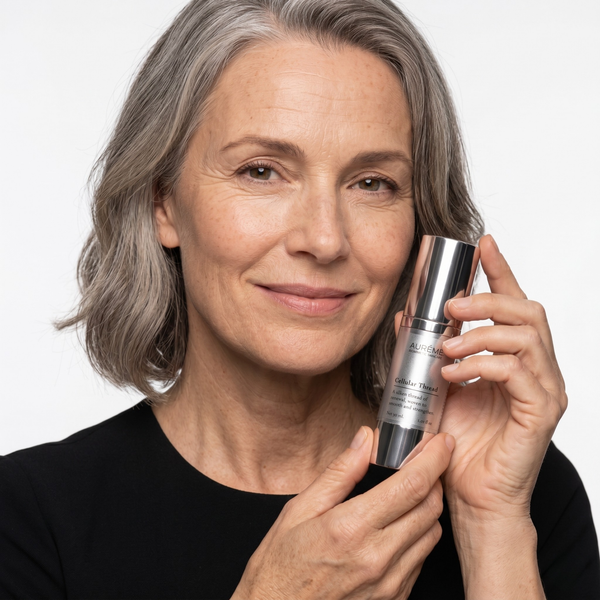
To support the skin’s natural resilience against this environmental degradation, some individuals incorporate specialised topical support like Cellular Thread, a peptide treatment serum formulated to encourage the youth-maintenance and firmness that UV exposure often compromises. For those seeking to further nourish the dermal barrier following sun exposure, Cellular Crème provides deep hydration and peptide replenishment to assist in maintaining a supple, age-defying complexion.
FAQ
Why is the Australian UV index more damaging than in Europe or North America?
Australia experiences up to 15% more UV radiation than similar latitudes in the Northern Hemisphere. This is due to a clearer atmosphere with fewer aerosols and the Earth being closer to the sun during the Southern Hemisphere summer [4]. This increased intensity means the threshold for triggering collagen-degrading MMPs is reached much faster, leading to more aggressive dermal remodelling in mature skin [1].
How does 'solar elastosis' differ from normal skin ageing?
Normal ageing involves a gradual decrease in collagen, whereas solar elastosis, driven by intense UV exposure, involves the accumulation of thickened, tangled, and non-functional elastic fibres in the dermis [5]. These disorganised fibres replace healthy collagen, leading to the leathery texture and yellowed hue commonly seen in sun-damaged Australian skin [3].
Can topical antioxidants mitigate UV-induced collagen breakdown?
Yes, topical antioxidants like Vitamin C (L-ascorbic acid) and Vitamin E (Tocopherol) can neutralise the ROS generated by Australian UV radiation before they trigger the MMP cascade [2]. However, in mature skin, these should be used alongside broad-spectrum sunscreens, as antioxidants alone cannot block the direct DNA damage caused by UVB photons [6].
References:
[1] Fisher GJ, et al. Molecular mechanisms of photoaging in human skin in vivo. Archives of Dermatology. 2002;138(11):1462-1470. doi:10.1001/archderm.138.11.1462
[2] Bosch R, et al. Mechanisms of Photoaging and Cutaneous Photocarcinogenesis, and Photoprotective Strategies with Phytochemicals. Antioxidants. 2015;4(2):248-268. doi:10.3390/antiox4020248
[3] Scharffetter-Kochanek K, et al. Photoaging of the skin: from phenotype to mechanisms. Experimental Gerontology. 2000;35(3):307-316. doi:10.1016/s0531-5565(00)00098-x
[4] Lemus-Deschamps L, Makin JK. Fifty years of changes in UV Index and solar UV exposure in Australia. Health Promotion Journal of Australia. 2012;23(2):153-154. doi:10.1071/he12153
[5] Naylor EC, et al. Molecular aspects of skin ageing. Maturitas. 2011;69(3):249-256. doi:10.1016/j.maturitas.2011.04.011
[6] Pinnell SR. Cutaneous photoaging and topical vitamin C: toxicity with low-dose UVA and UVB. Journal of the American Academy of Dermatology. 2003;48(6):866-874. doi:10.1067/mjd.2003.496
Medical Disclaimer: This article is for educational purposes only and does not constitute medical advice. Always consult a qualified healthcare professional before starting any new skincare regimen. Content reviewed by a biomedical scientist.