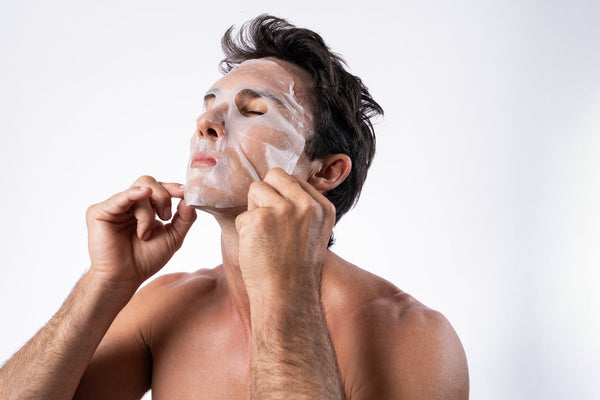
Building an effective skincare routine for sensitive skin requires a 'less is more' philosophy, focusing on biocompatible ingredients that reinforce the stratum corneum. The foundation must be a soap-free, non-foaming cleanser with a physiological pH (around 5.5) to avoid disrupting the skin’s acid mantle and lipid bilayer [1]. Following cleansing, the application of a fragrance-free moisturiser containing humectants like glycerin and barrier-repairing lipids such as ceramides or cholesterol is essential to mitigate trans-epidermal water loss (TEWL) [2].
Daily photoprotection is non-negotiable, but individuals with sensitive skin often tolerate inorganic (mineral) filters like zinc oxide or titanium dioxide better than organic (chemical) filters, which may trigger contact dermatitis in hyper-reactive complexions [3]. When introducing new active ingredients, Australian dermatologists recommend the 'patch test and pulse' method: applying the product to a small area for 48 hours and then gradually increasing frequency to allow the skin to develop tolerance without triggering an inflammatory cascade [4].
Sensitive skin is clinically defined as a syndrome characterised by the onset of unpleasant sensations—such as stinging, burning, or pruritus—in response to stimuli that normally should not cause such sensations [1]. From a physiological perspective, this is often attributed to an impaired epidermal barrier and an overactive innate immune system. When the stratum corneum is compromised, exogenous irritants can more easily penetrate the deeper layers of the epidermis, reaching sensory nerve endings and triggering the release of pro-inflammatory cytokines [2][5].
Furthermore, sensitive skin often exhibits an imbalance in the cutaneous microbiome and a heightened density of Transient Receptor Potential Vanilloid-1 (TRPV1) receptors. These receptors are activated by heat and various chemical triggers, leading to the characteristic flushes and discomfort associated with the condition [5]. Skincare strategies must therefore go beyond simple hydration to address neurosensory reactivity and microbial homeostasis to successfully manage long-term skin health [6].
If you are looking for a way to incorporate these principles into your daily ritual, our Surface Calm ceramide cleanser is formulated to support the lipid bilayer while maintaining the skin’s natural pH. To follow, many of our customers with reactive complexions find that Surface Calm pairs beautifully with Balance Biome Crème, a probiotic moisturiser that includes Bifida Ferment Lysate and Niacinamide to promote barrier resilience and a more balanced, settled complexion.
FAQ
Which ingredients should be avoided for sensitive skin?
Individuals should primarily avoid denatured alcohol, synthetic fragrances, and essential oils such as bergamot or lavender, as these are common allergens that exacerbate barrier dysfunction [3]. High concentrations of certain active ingredients, particularly L-ascorbic acid (Vitamin C) at low pH or alpha-hydroxy acids (AHAs) like glycolic acid, can cause significant irritation. Instead, look for more stable or buffered derivatives such as magnesium ascorbyl phosphate or polyhydroxy acids (PHAs), which provide gentle exfoliation due to their larger molecular size [4][6].
Can I use retinoids if I have sensitive skin?
Yes, but they must be utilised with caution. Retinyl esters or encapsulated retinol are generally better tolerated than pure tretinoin as they require conversion within the skin, resulting in a slower, more controlled release of the active molecule [2]. Using the 'sandwich technique' applying moisturiser before and after the retinoid—can significantly reduce irritation while maintaining the efficacy of the Vitamin A derivative [4].
How does the Australian climate affect sensitive skin?
Australia’s high UV index and varying humidity levels can significantly challenge the skin barrier. Intense UV exposure induces oxidative stress and depletes the skin's natural antioxidant reservoirs, leading to 'sun-induced' sensitivity [3]. Additionally, the use of air conditioning in hot summers or internal heating in winter dries out the air, accelerating TEWL and making the skin more susceptible to environmental irritants [5].
References:
[1] Misery L, et al. Journal of the European Academy of Dermatology and Venereology. 2017;31(1):18-25. doi:10.1111/jdv.13977
[2] Draelos ZD. Journal of Cosmetic Dermatology. 2018;17(5):790-797. doi:10.1111/jocd.12745
[3] Passeron T, et al. Journal of the European Academy of Dermatology and Venereology. 2020;34(4):719-729. doi:10.1111/jdv.16134
[4] Levin J, Momin SB. The Journal of Clinical and Aesthetic Dermatology. 2010;3(2):22-41.
[5] Ständer S, et al. International Journal of Molecular Sciences. 2019;20(11):2618. doi:10.3390/ijms20112618
[6] Chen W, et al. Journal of Cosmetic Dermatology. 2021;20(1):15-22. doi:10.1111/jocd.13735
Medical Disclaimer: This article is for educational purposes only and does not constitute medical advice. Always consult a qualified healthcare professional before starting any new skincare regimen. Content reviewed by a biomedical scientist.