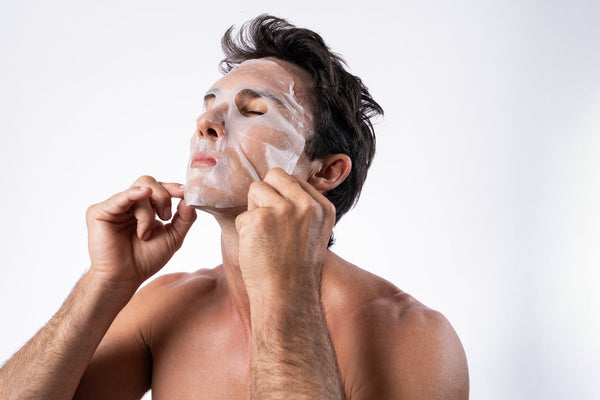
Achieving 'glass skin', a term describing a complexion that appears exceptionally smooth, luminous, and translucent—requires a multi-faceted dermatological approach focused on three pillars: surface refinement, intensive hydration, and barrier integrity. From a scientific perspective, this aesthetic is the result of minimising light scattering on the skin's surface. This is primarily achieved through 'double cleansing' to remove lipid-soluble pollutants and the use of chemical exfoliants like alpha-hydroxy acids (AHAs) or poly-hydroxy acids (PHAs) to promote regular desquamation, which ensures the stratum corneum remains thin and uniform [1].
Once the surface is refined, the 'glass' effect is enhanced by saturating the epidermis with humectants such as low-molecular-weight hyaluronic acid and glycerin. These ingredients draw water into the corneocytes, causing them to swell and create a plumped, reflective surface [2]. To maintain this luminosity, the application of targeted actives like Niacinamide (Vitamin B3) is essential; it not only improves skin texture and pore appearance but also boosts the production of ceramides, ensuring the skin retains its hydration and reflects light evenly across a healthy lipid barrier [3].
The optical properties of the skin are governed by how light interacts with the various layers of the integumentary system. To achieve a translucent appearance, one must optimise the Specular Reflection (external glow) while minimising Diffuse Reflection caused by roughness or scaling. Clinical data suggests that a well-hydrated stratum corneum has a higher refractive index, allowing light to penetrate deeper into the dermis and bounce back, creating the 'lit-from-within' effect characteristic of glass skin [4].
Biologically, this state is maintained by supporting the skin's Natural Natural Moisturising Factors (NMFs) and ensuring the Acid Mantle remains at an optimal pH (approx. 4.7–5.7). Disruptions to this equilibrium, often caused by over-cleansing or environmental stressors common in the Australian climate, lead to micro-fissures and a dull, matte appearance. Therefore, the 'glass skin' protocol prioritises biocompatible formulations that reinforce the skin’s structural proteins—collagen and elastin—while suppressing inflammatory pathways that cause redness and uneven tone [5].
For those looking to enhance this translucency, our Surface Renew was formulated with an AHA fruit complex and pineapple enzymes to gently support cell turnover and minimise surface irregularities. To further preserve this luminosity, some of our customers have found that applying a peptide treatment serum like Cellular Thread helps to firm the skin’s appearance and improve overall radiance through its specialised botanical blend.
FAQ
Does exfoliation help in achieving glass skin?
Yes, regular chemical exfoliation is critical for glass skin. By utilising AHAs like glycolic or lactic acid, you dissolve the desmosomes holding dead skin cells together, preventing the buildup that causes a dull, textured appearance [1]. However, it is vital to avoid over-exfoliation, which can compromise the skin barrier and lead to transepidermal water loss (TEWL) [2].
What role does Niacinamide play in this routine?
Niacinamide is a powerhouse for glass skin because it addresses multiple concerns: it regulates sebum production to minimise pore visibility, inhibits melanosome transfer to brighten the complexion, and stimulates ceramide synthesis to strengthen the moisture barrier [3][6].
Is sunscreen necessary for glass skin?
Sunscreen is arguably the most important step in an Australian glass skin routine. Chronic UV exposure causes photo-ageing, which degrades collagen and leads to solar lentigines (sun spots), both of which destroy the clarity and smoothness required for a glass-like finish [7]. Daily use of a broad-spectrum SPF 50+ protects the structural integrity of the skin [4].
References:
[1] Rodan K, et al. Skincare Bootcamp: The Evolving Role of Skincare. Plastic and Reconstructive Surgery. 2016;137(3):572e-581e. doi:10.1097/01.prs.0000475787.26307.97
[2] Verallo-Rowell VM, et al. Double-blind, moisturiser-controlled study of hyaluronic acid in skin hydration. Journal of Drugs in Dermatology. 2011;10(9):990-1000.
[3] Gehring W. Nicotinic acid/niacinamide and the skin. Journal of Cosmetic Dermatology. 2004;3(2):88-93. doi:10.1111/j.1473-2130.2004.00115.x
[4] Voegeli R, et al. The biology of skin colour and the optical property of skin. International Journal of Cosmetic Science. 2019;41(3):213-224. doi:10.1111/ics.12526
[5] Schmid-Wendtner MH, Korting HC. The pH of the skin surface and its duty. Dermatology. 2006;213(3):183-189. doi:10.1159/000094670
[6] Levin J, Momin SB. How much do we really know about our favorite cosmeceutical ingredients? The Journal of Clinical and Aesthetic Dermatology. 2010;3(2):22-41.
[7] Hughes MCB, et al. Sunscreen and prevention of skin aging: a randomized trial. Annals of Internal Medicine. 2013;158(11):781-790. doi:10.7326/0003-4819-158-11-201306040-00002
Medical Disclaimer: This article is for educational purposes only and does not constitute medical advice. Always consult a qualified healthcare professional before starting any new skincare regimen. Content reviewed by a biomedical scientist.