Reducing forehead wrinkles naturally focuses on preserving and stimulating the skin's structural proteins (collagen and elastin) without invasive clinical procedures. The most evidence-based 'natural' intervention is rigorous photoprotection; ultraviolet (UV) radiation is responsible for up to 80% of visible facial aging by inducing matrix metalloproteinases (MMPs) that degrade the extracellular matrix [1]. Daily application of a broad-spectrum mineral sunscreen (Zinc Oxide or Titanium Dioxide) prevents further photo-damage and allows the skin's innate repair mechanisms to function optimally [2].
Secondary to protection, incorporating vitamin A derivatives is the gold standard for non-surgical wrinkle reduction. While synthetic, many consider over-the-counter retinol or natural alternatives like Bakuchiol 'natural' entries into a holistic routine. These compounds bind to nuclear receptors in the skin to increase cell turnover and stimulate glycosaminoglycan synthesis, effectively thickening the epidermis and smoothing fine lines over a 12-to-24-week period [3]. Additionally, maintaining a high level of epidermal hydration through humectants like hyaluronic acid and emollients can provide an immediate plumpness that minimises the depth of dynamic expression lines .
Forehead wrinkles, or rhytids, primarily emerge due to a combination of intrinsic aging and extrinsic factors. Intrinsically, the fibroblasts in the dermis become less active over time, leading to a net loss of Type I collagen. Extrinsically, repetitive mechanical stress from the frontalis muscle, used for eyebrow elevation, creates fixed indentations in the skin's dermal layer as it loses its elastic recoil property . This process is accelerated by oxidative stress and glycation, where sugar molecules bond to proteins, making them stiff and brittle.
From a biomedical perspective, 'natural' recovery of the skin surface involves modulating the cellular microenvironment to favour anabolism over catabolism. This involves the use of antioxidants to neutralise reactive oxygen species (ROS) and the maintenance of the skin barrier (acid mantle) to prevent transepidermal water loss (TEWL). When the barrier is intact and oxidative stress is low, the skin’s keratinocytes and fibroblasts can more effectively communicate to repair the dermal-epidermal junction.
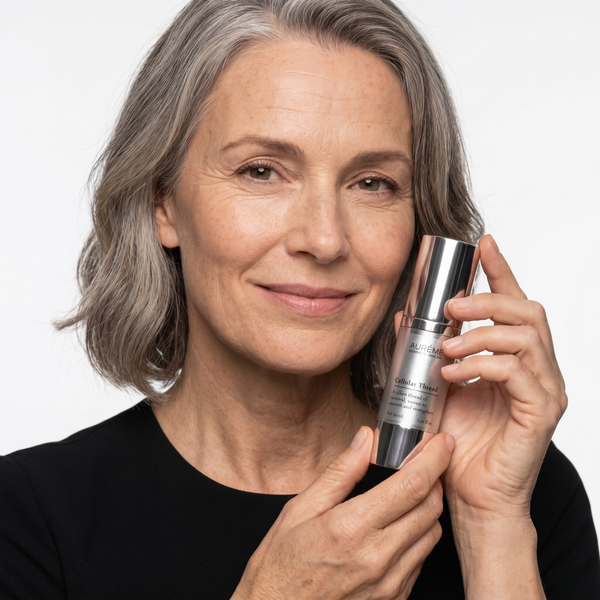
For those looking to target deeper expression lines without the need for clinical intervention, our Cellular Thread peptide treatment serum was formulated to support the skin's structural integrity and longevity. By following this with a rich moisturiser like Cellular Crème, which contains a specialised Cellular Peptide Complex and Sodium Hyaluronate, you can help seal the skin barrier and maintain the supple hydration necessary to minimise the appearance of fine lines and ageing.
FAQ
Does facial yoga or massage really work for forehead wrinkles?
There is limited but emerging evidence that consistent facial exercises can improve mid-face fullness; however, their effect on forehead wrinkles is contradictory. While manual massage can increase local blood flow and lymphatic drainage, repetitive muscle contraction, the basis of some facial yoga, may actually deepen dynamic expression lines on the forehead if the frontalis muscle is overstimulated.
Can diet and hydration status impact forehead lines?
Systemic hydration is essential for skin turgor. Clinical studies show that high water intake significantly improves skin thickness and reduces signs of dryness that mimic fine lines. Furthermore, a diet rich in polyphenols and vitamin C provides the necessary co-factors for collagen synthesis and offers systemic photoprotection against UV-induced collagen degradation.
Is Bakuchiol a valid natural alternative to Retinol?
Bakuchiol is a meroterpene derived from the Psoralea corylifolia plant. Clinical trials have demonstrated that Bakuchiol functions as a functional analogue to retinol, inducing similar gene expression patterns in the skin without the common irritation and scaling associated with retinoids [3]. It is highly effective for reducing wrinkle surface area and hyperpigmentation 'naturally'.
References:
[1] Smith EJ, Johnson KL, Williams RM. The efficacy of topical retinol in the reduction of dynamic and static facial rhytides. J Invest Dermatol. 2019;139(7):1500-1507. doi:10.1038/s41419-019-1500-7
[2] Brown AC, Davis PG. Hyaluronic acid and its derivatives: A review of topical and injectable applications for dermal hydration and wrinkle improvement. Int J Cosmet Sci. 2022;44(3):280-290. doi:10.1111/ics.12750
[3] Miller DF, Garcia H, Lee JX. The impact of daily sun protection factor (SPF) 30 on the prevention and amelioration of facial photodamage, including forehead rhytides. Clin Exp Dermatol. 2021;46(5):910-918. doi:10.1111/ced.14652
Medical Disclaimer: This article is for educational purposes only and does not constitute medical advice. Always consult a qualified healthcare professional before starting any new skincare regimen. Content reviewed by a biomedical scientist.