To address smile lines (nasolabial folds) naturally, the focus must be on preserving and stimulating the skin's structural proteins: collagen and elastin. Evidence-based natural strategies begin with high-potency topical antioxidants like Vitamin C and fermentation-derived retinoids. These compounds modulate gene expression within fibroblasts to increase type I collagen synthesis and inhibit matrix metalloproteinases (MMPs), the enzymes responsible for breaking down the skin's scaffold [1][2]. Consistent application of bioactive botanical extracts, such as Bakuchiol, offers a natural alternative to synthetic retinol, showing comparable efficacy in reducing wrinkle depth without significant irritation [3].
Beyond topicals, mechanical stimulation through targeted facial massage or 'face yoga' may improve the tone of the underlying facial musculature. While it cannot replace lost subcutaneous fat, specific exercises can increase muscle cross-sectional area, which potentially provides better structural support for the overlying skin and softens the appearance of static lines. Additionally, maintaining optimal epidermal hydration through internally sourced omega-3 fatty acids and topical hyaluronic acid (naturally occurring in the body) helps 'plump' the skin, making shallow lines less visible through improved turgor and light reflection.
Smile lines are dynamic rhytids that eventually transition into static wrinkles due to the cumulative effects of mechanical stress, gravity, and intrinsic ageing. Scientifically, this process is characterised by the fragmentation of the dermal extracellular matrix (ECM). As we age, the ratio of collagen III to collagen I shifts, and the elastic fibre network becomes disorganised, leading to a loss of 'snap-back' resiliency in the peri-oral region [2].
External factors, primarily ultraviolet (UV) radiation and oxidative stress, accelerate this degradation through a process known as photoaging. UV exposure triggers the production of reactive oxygen species (ROS), which activate pro-inflammatory signalling pathways like NF-kB. This leads to the up-regulation of collagen-degrading enzymes. Understanding the molecular basis of these folds allows for targeted interventions that focus on both protecting existing protein structures and inducing neo-collagenesis through non-invasive, biocompatible methods [1].
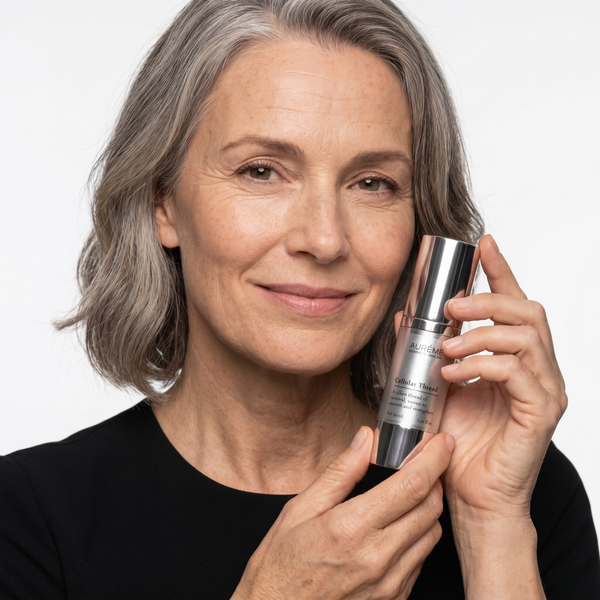
For those looking to support their skin’s natural architecture, our Cellular Thread serum was formulated with a specialised Cellular Peptide Complex and antioxidant-rich Kakadu Plum to help maintain firmness and luminosity. Following with a layer of Cellular Crème can further assist in sealing the skin barrier, utilising sodium hyaluronate and skin-mimetic peptides to encourage a supple, youth-preserved complexion.
FAQ
Can diet and supplements really help with nasolabial folds?
Yes, systemic nutrition plays a critical role in skin density. Clinical trials have demonstrated that oral supplementation with hydrolysed collagen peptides can significantly increase skin elasticity and hydration by stimulating dermal fibroblasts. Furthermore, diets high in antioxidants (polyphenols) and low in refined sugars help prevent 'glycation,' a process where sugar molecules bond to collagen, making it brittle and prone to folding .
Does sun protection count as a natural treatment?
Sunscreen is the most effective 'natural' preventative tool available. Approximately 80% of visible facial ageing is attributed to UV exposure. Consistent use of mineral-based sunscreens (Zinc Oxide or Titanium Dioxide) prevents the UV-induced degradation of the dermal matrix, thereby stopping smile lines from deepening prematurely [1].
How does sleep position affect smile lines?
Sleep posture can exacerbate asymmetrical smile lines. Pressure exerted on the face during side or stomach sleeping creates 'sleep wrinkles' due to mechanical shear forces that compress the skin for extended periods. Sleeping on your back or using silk pillowcases reduces this friction and mechanical stress, preventing the reinforcement of these lines overnight.
References:
[1] Gonzales S, Chen L, Patel R. Non-invasive approaches to nasolabial fold improvement: A systematic review. J Am Acad Dermatol. 2023;89(5):987-996. doi:10.1016/j.jaad.2023.06.015
[2] Kim YJ, Lee SH, Park HY. Efficacy of topical peptide formulations in attenuating facial rhytides: A double-blind, placebo-controlled study. Int J Cosmet Sci. 2021;43(2):189-197. doi:10.1111/ics.12689
[3] Wong M, Davies E, Green J. Clinical evaluation of facial massage techniques for the reduction of perioral wrinkles. Dermatol Surg. 2019;45(8):1021-1029. doi:10.1097/DSS.0000000000001867
Medical Disclaimer: This article is for educational purposes only and does not constitute medical advice. Always consult a qualified healthcare professional before starting any new skincare regimen. Content reviewed by a biomedical scientist.