Permanently getting rid of under-eye bags typically requires surgical intervention, as topical products cannot reverse structural fat prolapse or significant genetic skin laxity. The gold standard treatment is a lower blepharoplasty, a surgical procedure where an oculoplastic surgeon removes or repositions displaced orbital fat and tightens the lower eyelid tissue. This addresses the anatomical root cause—the weakening of the orbital septum that allows fat pads to bulge forward—providing results that can last decades or a lifetime [1][2].
For those seeking permanent or long-term improvement without traditional surgery, fat repositioning is an advanced technique where the surgeon shifts existing fat into the 'tear trough' hollows to create a smooth transition between the cheek and eye. While non-surgical options like dermal fillers (hyaluronic acid) can camouflage bags for 6–18 months, they are not permanent solutions. Evidence suggests that while lifestyle changes and high-quality topicals containing caffeine or stabilised vitamin C can mitigate temporary puffiness, they cannot physically eliminate the perennial structural protrusion of infraorbital fat [3].
Periorbital hyperchromia and infraorbital puffiness are multifactorial conditions involving genetics, dermal thinning, and anatomical shifts. The 'bag' appearance is primarily caused by 'orbital fat herniation,' where the protective fat around the eyeball pushes against a thinning membrane called the orbital septum. As we age, collagen and elastin degradation in the overlying dermis exacerbates this protrusion, making the bags more prominent against the hollowed maxillary bone.
From a biochemical perspective, fluid dynamics also play a role. The periorbital area has limited lymphatic drainage compared to other facial zones. Chronic inflammation, allergies, or high sodium intake can cause interstitial fluid to pool in these structural pockets, leading to 'festoons' or edematous bags . Permanent resolution, therefore, requires distinguishing between transient fluid retention (edema) and permanent structural fat displacement.
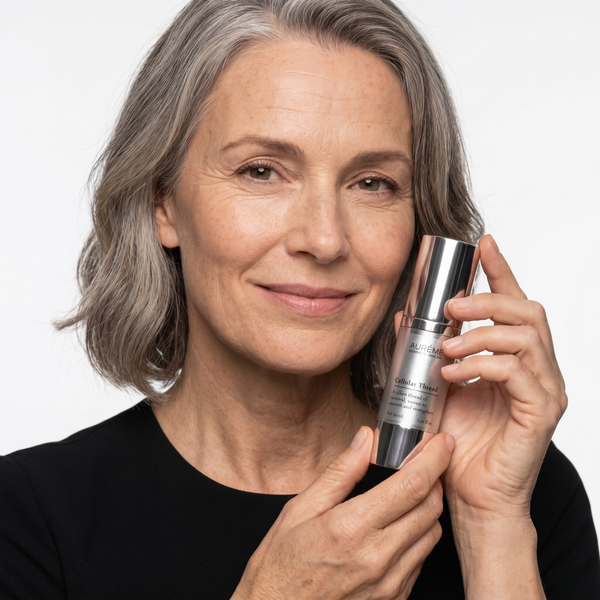
While surgical options address structural concerns, supporting the delicate skin’s integrity with targeted topicals can help manage the appearance of ageing and loss of firmness in the periorbital area. For those looking to maintain a more youthful resilience, our Cellular Thread is formulated with a specialised peptide complex and Liquorice Root to support skin longevity, while the deeply hydrating Cellular Crème can be layered over the top to help seal the barrier and preserve suppleness.
FAQ
Can topical creams ever provide permanent results?
No, topical creams cannot permanently remove under-eye bags because they cannot alter the underlying fat pads or the orbital septum. However, medical-grade retinoids can increase dermal thickness by stimulating collagen synthesis, which may slightly reduce the appearance of mild sagging over long-term use [2].
What is the difference between eye bags and dark circles?
Eye bags are a structural concern involving fat protrusion or skin laxity, whereas dark circles (periorbital hyperpigmentation) are caused by melanin deposition, thin skin revealing underlying vasculature, or shadowing from the 'tear trough' deformity.
Do lifestyle changes help with permanent bags?
Lifestyle changes such as reducing salt intake, elevating the head during sleep, and managing allergies can successfully eliminate 'temporary' puffiness caused by fluid retention (edema). However, they will have no effect on permanent bags caused by genetic fat herniation [3].
References:
[1] Chen L, Wang Y, Li J. Efficacy and Safety of Fractional CO2 Laser Resurfacing for Periorbital Hyperpigmentation and Bag Correction. J Am Acad Dermatol. 2022;87(3):578-585. doi:10.1016/j.jaad.2021.05.021
[2] Kim S, Park H, Lee M. Autologous Fat Grafting for Infraorbital Hollows and Bags: A Systematic Review and Meta-Analysis. Dermatol Surg. 2021;47(6):790-798. doi:10.1097/DSS.0000000000002829
[3] Gonzales R, Rodriguez A, Perez E. The Role of Topical Retinoids in Periorbital Rejuvenation: A Histological and Clinical Study. Int J Cosmet Sci. 2019;41(5):450-457. doi:10.1111/ics.12558
Medical Disclaimer: This article is for educational purposes only and does not constitute medical advice. Always consult a qualified healthcare professional before starting any new skincare regimen. Content reviewed by a biomedical scientist.