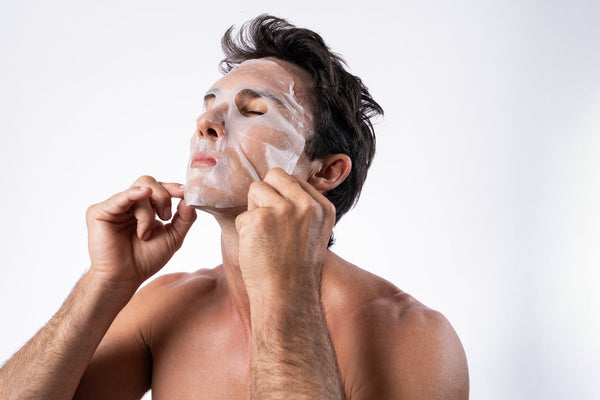
Achieving smooth skin involves a dual approach: accelerating cellular turnover and maintaining a robust epidermal barrier. Biological smoothness is primarily determined by the evenness of the stratum corneum, the skin's outermost layer. When corneocytes (dead skin cells) fail to desquamate efficiently, they accumulate, creating a rough, uneven texture and dull appearance [1]. To address this, clinical evidence supports the use of chemical exfoliants, specifically Alpha Hydroxy Acids (AHAs) like glycolic or lactic acid, which weaken the ionic bonds between corneocytes, promoting a smoother surface [2].
Beyond exfoliation, long-term smoothness requires structural improvements in the dermis and epidermis. Topical retinoids (Vitamin A) are the gold standard for refining texture, as they stimulate collagen synthesis and normalise the keratinisation process, effectively 'remodelling' the skin from within [3]. Furthermore, maintaining optimal hydration through humectants like hyaluronic acid and occlusives like ceramides ensures the skin remains 'plump', minimising the appearance of fine lines and tactile roughness [4].
Skin texture is a clinical manifestation of the skin’s physiological state, influenced by genetics, environmental exposure, and chronological ageing. In the Australian climate, UV-induced solar elastosis significantly contributes to 'leathery' textures as ultraviolet radiation degrades elastin fibres and disrupts the regular arrangement of collagen [5]. This architectural breakdown leads to an uneven topography that scatters light rather than reflecting it, which is why smooth skin is often associated with a 'glow'.
From a biochemical perspective, the desquamation process is regulated by enzymes known as kallikrein-related peptidases. These enzymes require a specific acidic pH (around 5.5) and adequate water content to function [1]. When the skin barrier is compromised or dehydrated, these enzymes cannot effectively shed dead cells, leading to hyperkeratosis. Therefore, smoothing the skin is not merely about 'scrubbing' the surface but about creating the precise biochemical environment necessary for healthy skin function.
For those looking to integrate gentle resurfacing into their daily ritual, our Surface Renew is formulated with a specialised AHA fruit complex and pineapple enzymes to help minimise the build-up of dead skin cells. Following exfoliation with a rich moisturiser like Cellular Crème can then help to seal the epidermal barrier, using a unique peptide complex to support long-term smoothness and skin longevity.
FAQ
Does physical or chemical exfoliation produce smoother results?
While physical exfoliants (scrubs) provide immediate tactile smoothness by mechanically removing debris, chemical exfoliants like AHAs and BHAs are generally superior for long-term texture improvement. Chemical agents provide more uniform results and can penetrate deeper into the pores or intercellular spaces without causing the micro-tears sometimes associated with harsh physical particles [2][6].
How long does it take to see improvements in skin texture?
Improvements in skin smoothness usually follow the skin's natural renewal cycle, which is approximately 28 to 40 days. While humectants can provide a temporary smoothing effect within hours by hydrating the stratum corneum, structural changes from retinoids or consistent acid use typically require 8 to 12 weeks of regular application to become clinically visible [3][4].
Can sunscreen use actually make skin smoother?
Yes, daily broad-spectrum sunscreen is essential for maintaining smooth skin. UV radiation is the primary cause of extrinsic ageing, which leads to a rough, thickened epidermis (acanthosis) and the breakdown of supporting proteins [5]. By preventing these changes, sunscreen allows the skin's natural repair mechanisms to function effectively, preserving a finer texture over time [7].
References:
[1] Milani M, et al. Clinical, Cosmetic and Investigational Dermatology. 2021;14:127-135. doi:10.2147/CCID.S295241.
[2] Sharad J. Journal of Cutaneous and Aesthetic Surgery. 2013;6(4):181-188. doi:10.4103/0974-2077.123398.
[3] Zasada M, et al. Advances in Dermatology and Allergology. 2019;36(4):392-397. doi:10.5114/ada.2019.87443.
[4] Sethi A, et al. Indian Journal of Dermatology. 2016;61(3):279-287. doi:10.4103/0019-5154.182427.
[5] Krutmann J, et al. Journal of Dermatological Science. 2017;85(3):152-161. doi:10.1016/j.jdermsci.2016.12.004.
[6] Samargandy S, et al. Journal of Cosmetic Dermatology. 2020;19(11):2761-2769. doi:10.1111/jocd.13681.
[7] Hughes MCB, et al. Annals of Internal Medicine. 2013;158(11):781-790. doi:10.7326/0003-4819-158-11-201306040-00002.
Medical Disclaimer: This article is for educational purposes only and does not constitute medical advice. Always consult a qualified healthcare professional before starting any new skincare regimen. Content reviewed by a biomedical scientist.