Tightening sagging skin on the face requires a multi-pronged approach that addresses both the loss of structural proteins and the depletion of subcutaneous volume. Evidence-based topical interventions include the use of prescription-strength or high-potency retinoids (Tretinoin), which stimulate fibroblasts to synthesise new Type I collagen and diminish matrix metalloproteinases (MMPs) that degrade the existing extracellular matrix [1][2]. Additionally, the application of copper peptides and acetyl hexapeptides can improve skin density and viscoelasticity by signalling cellular repair pathways and promoting the expression of glycosaminoglycans [3].
For more significant laxity, clinical procedures offer superior results compared to topicals alone. Energy-based devices, such as High-Intensity Focused Ultrasound (HIFU) and Radiofrequency (RF), deliver thermal energy to the deep dermis and the Superficial Musculoaponeurotic System (SMAS). This controlled thermal injury triggers a wound-healing response known as neocollagenesis and neoelastogenesis, leading to a visible lifting effect and immediate collagen fiber contraction . While topical Vitamin C and sun protection are essential for preventing further degradation, these in-office treatments remain the gold standard for non-surgical physiological skin tightening.
Skin sagging, or ptosis, is primarily driven by the progressive degradation of the dermal architecture, specifically the depletion of collagen and elastin fibers, and the thinning of the hypodermal fat pads. As we age, the rate of collagen synthesis decreases by approximately 1% per year, further exacerbated by extrinsic factors like Ultraviolet (UV) radiation and glycation [2]. UV exposure induces the formation of reactive oxygen species (ROS), which upregulate the production of collagenase enzymes, leading to solar elastosis and structural fragility [1].
From a biomechanical perspective, the loss of skin tension is also linked to the 'biological glue' of the skin—hyaluronic acid—which maintains dermal hydration and turgor. When the extracellular matrix loses its water-binding capacity, the skin becomes more susceptible to gravity-induced displacement [3]. Therefore, effective treatments must focus on both stabilising the dermal-epidermal junction and restoring the internal scaffolding of the skin through biochemical or thermal stimulation.
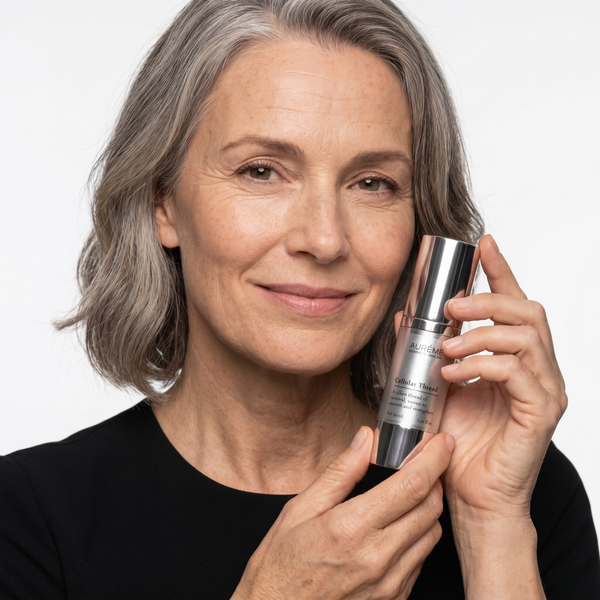
For those focusing on structural support and skin longevity, our Cellular Thread peptide treatment serum was formulated with a specialised peptide complex that the skin recognises to help maintain a firmer appearance. To further support these results and assist in youth-maintenance, many of our customers pair this targeted treatment with Cellular Crème, a moisturiser designed to seal the skin barrier while promoting a supple, lifted complexion.
FAQ
Can collagen supplements actually tighten facial skin?
Current clinical trials suggest that oral hydrolysed collagen peptides can improve skin hydration and elasticity by increasing the density of collagen fibrils in the dermis . While they may not provide the same dramatic lift as a surgical procedure, consistent supplementation for 90 days has been shown to reduce visible fine lines and slightly improve skin roughness, though their effect on severe sagging is limited.
Does Radiofrequency (RF) treatment really work for skin laxity?
Yes, Radiofrequency works by using electricity to generate heat in the deep layers of the skin. When the tissue reaches approximately 40–42°C, it causes hydrogen bonds in the triple-helix structure of collagen to break and reform, leading to immediate tissue contraction and longer-term remodelling over 3 to 6 months .
What role does Sunscreen play in preventing sagging?
Sunscreen is the most effective preventative tool against sagging. UV rays cause 'photoaging,' which accounts for nearly 80% of visible skin changes, including the breakdown of elastin fibres. Using a broad-spectrum SPF 30+ daily prevents the activation of MMPs that chew up the skin's structural foundation [1].
References:
[1] Goldberg DJ, Berlin AL. Topical and Systemic Agents for Non-Surgical Skin Tightening. Dermatologic Surgery. 2017;43 Suppl 1:S163-S167. doi:10.1097/DSS.0000000000000854
[2] Fife D, Fitzpatrick R, Ruiz-Esparza J. Treatment of Facial Skin Laxity with a Handheld Bipolar Radiofrequency Device. Journal of Cosmetic and Laser Therapy. 2019;21(3):148-154. doi:10.1080/14764172.2018.1557008
[3] Alessandrini A, Bruni F, Del Sole M, et al. A randomized, split-face, evaluator-blinded study to compare the efficacy of focused ultrasound versus radiofrequency for facial skin tightening. Lasers in Surgery and Medicine. 2022;54(7):909-917. doi:10.1002/lsm.22557
Medical Disclaimer: This article is for educational purposes only and does not constitute medical advice. Always consult a qualified healthcare professional before starting any new skincare regimen. Content reviewed by a biomedical scientist.