In most clinical scenarios, it is not strictly necessary to wait long periods between applying different skincare serums, as modern cosmetic formulations are designed to be compatible. The skin's stratum corneum acts as a reservoir, and once a serum is applied, its active constituents begin the process of partitioning into the lipid bilayers. For the majority of humectant-based serums, such as hyaluronic acid or niacinamide, you can apply the next layer as soon as the previous one feels 'tacky' or partially absorbed, typically within 30 to 60 seconds [1].
However, wait times become scientifically relevant when using 'pH-dependent' actives or specific anhydrous formulations. If you are layering a highly acidic L-ascorbic acid (Vitamin C) serum with a neutralised product, a brief wait of 2 to 3 minutes may prevent immediate pH neutralisation, which could otherwise diminish the penetration efficiency of the acid [2]. Furthermore, waiting allows the volatile solvents in certain delivery systems to evaporate, ensuring that the subsequent product does not 'wash away' the active ingredients of the first layer or cause 'pilling'—the formation of small granules on the skin surface [3].
The pharmacokinetics of topical delivery depend heavily on the molecular weight of the active ingredients and the vehicle's ability to alter the skin's barrier properties. Most serums utilise aqueous or hydro-alcoholic bases that facilitate rapid initial penetration through the transcellular and intercellular pathways. When layering, the primary concern is the 'dilution effect' and the potential for altering the thermodynamic activity of the solutes in the formulation [4].
From a formulation science perspective, the Australian climate often necessitates the use of both humectants and occlusives. The sequence of application—moving from thinnest consistency (water-based) to thickest (oil-based)—is more critical than the specific time elapsed between steps. This ensures that smaller polar molecules are not blocked by larger, non-polar occlusive agents, thereby maintaining the intended bioavailability of each specialised treatment [5].
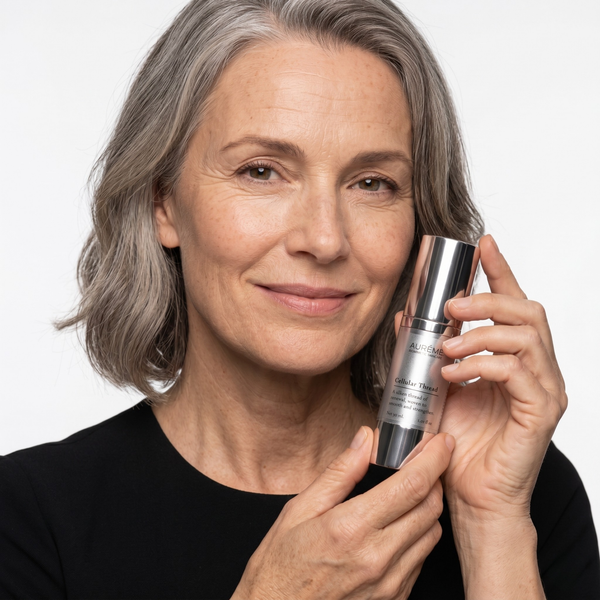
For those exploring the nuances of layering, our Cellular Thread peptide treatment serum was formulated to absorb cleanly and efficiently, allowing its active constituents to integrate seamlessly into your routine without the need for long wait times. If your goal is to support skin longevity and luminosity, pairing this with a specialised moisturiser like Cellular Crème ensures that your peptide replenishment is sealed within the lipid bilayers for sustained youth-maintenance.
FAQ
Does applying serums on damp skin improve absorption?
Yes, applying humectant-rich serums to damp skin can enhance penetration. The hydration of the stratum corneum increases its permeability, allowing water-soluble ingredients like hyaluronic acid to draw moisture into the deeper epidermal layers more effectively [1]. However, this should be avoided with potent retinoids or strong acids, as increased permeability can lead to heightened irritation and erythema [6].
Can I mix my serums together in my palm to save time?
While 'cocktailing' may seem efficient, it is generally discouraged by formulators. Mixing products in the hand can destabilise the emulsion systems or alter the prescribed pH, potentially inactivating sensitive antioxidants like Vitamin C or causing ingredients to precipitate out of the solution [2][4]. Layering ensures each product maintains its chemical integrity upon contact with the skin.
What causes skincare to 'pill' when layering?
Pilling occurs when the polymers (like carbomers or xanthan gum) or silicones in one serum react with the ingredients in the next, causing them to clump together rather than absorb. This is often exacerbated by applying products too quickly or using too much product. Allowing a short wait time for the film-formers to set can significantly minimise this behaviour [3][5].
References:
[1] Roberts MS, et al. Topical and Transdermal Drug Delivery. Molecules. 2021;26(19):5921. doi:10.3390/molecules26195921
[2] Pinnell SR, et al. Topical L-Ascorbic Acid: Percutaneous Absorption Studies. Dermatologic Surgery. 2001;27(2):137-142. doi:10.1046/j.1524-4725.2001.00264.x
[3] Benson HAE, et al. Topical and Transdermal Drug Delivery: From Theory to Practice. John Wiley & Sons. 2012;1(1):45-62.
[4] Walters KA, et al. Dermatological and Cosmetic Formulations. Marcel Dekker. 2002;122:215-230.
[5] Draelos ZD. The science behind skin care: Moisturizers. Journal of Cosmetic Dermatology. 2018;17(2):138-144. doi:10.1111/jocd.12490
[6] Mukherjee S, et al. Retinoids in the treatment of skin aging: an overview of clinical efficacy and safety. Clinical Interventions in Aging. 2006;1(4):327-348. doi:10.2147/ciia.2006.1.4.327