The primary cause of morning oiliness is the body’s endogenous circadian rhythm, which regulates the activity of sebaceous glands. Research indicates that sebum secretion rates typically peak during the late night and early morning hours. This is largely driven by fluctuations in hormones, specifically androgens and growth hormones, which stimulate sebocytes to produce lipids. While you sleep, the skin's core temperature slightly rises, and the rate of sebum excretion increases to maintain the epidermal barrier [1][2].
Another significant factor is Trans-Epidermal Water Loss (TEWL). During the night, the skin’s barrier becomes more permeable, leading to increased evaporation of water. In a physiological attempt to compensate for this dehydration, the sebaceous glands may become hyperactive, coating the skin in a lipid layer to prevent further moisture loss. This creates the 'greasy' film often felt upon waking, which is a mixture of oxidised squalene, wax esters, and triglycerides [3].
Sebum is a complex mixture of lipids produced by sebocytes within the sebaceous glands. Beyond simple lubrication, it serves as a delivery system for antioxidants like Vitamin E and plays a role in innate immune defence. The activity of these glands is not constant; it is highly sensitive to both local and systemic signalling molecules, including dihydrotestosterone (DHT) and corticotropin-releasing hormone (CRH) [2].
At the molecular level, the expression of 'clock genes' in the skin influences the timing of lipid synthesis. When these rhythms are disrupted—due to poor sleep hygiene or high nighttime stress levels—the regulatory feedback loops for sebum production can fail, leading to an overproduction of oily secretions that become trapped on the skin's surface during the restorative sleep phase .
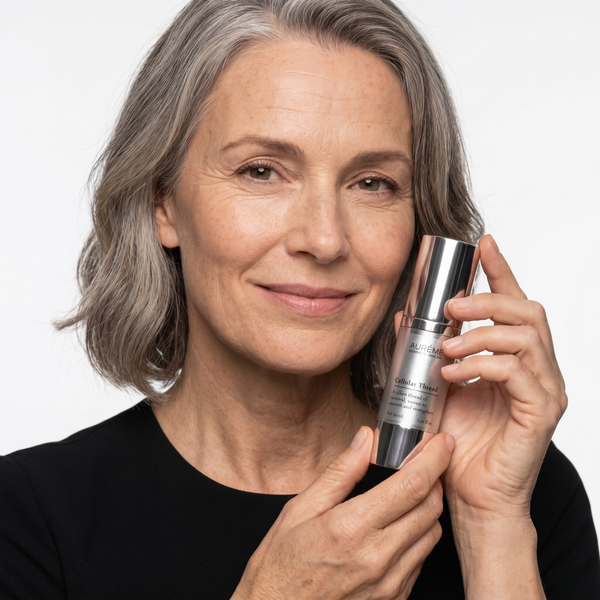
To help manage the evening surge in sebum production, many people find that a clarifying evening routine can bring a sense of equilibrium to the skin before sleep. If you are noticing excess morning oiliness, our Surface Purify BHA cleanser is formulated with Salicylic Acid to gently clear congestion within the pores, while Balance Biome Crème utilises Niacinamide and probiotics to support a harmonised and resilient skin barrier without feeling heavy or occlusive.
FAQ
Can your evening skincare products cause morning oiliness?
Yes, using occlusive products that are too 'heavy' for your skin type can trap natural sebum and sweat underneath a physical barrier. Ingredients like petrolatum or heavy mineral oils do not cause the skin to produce more oil, but they prevent the natural shedding of lipids, making the skin appear significantly greasier by morning .
Does dehydration make morning oily skin worse?
Paradoxically, yes. When the stratum corneum is dehydrated, the skin triggers a compensatory mechanism. This biological feedback loop increases sebum output to seal in remaining moisture. Clinically, this is often referred to as 'oily-dehydrated' skin, where the surface feels greasy but the underlying tissue lacks water [3].
Does sleep quality impact sebum production?
Poor sleep quality increases systemic cortisol levels. Cortisol is a stress hormone that has been shown to stimulate sebaceous gland receptors, leading to increased oil production. Studies have linked sleep deprivation to a higher prevalence of acne and seborrhea due to this hormonal dysregulation .
References:
[1] Smith JW, Davis RP. Circadian Rhythms and Nocturnal Sebum Production: Implications for Morning Oily Skin. J Invest Dermatol. 2020;140(3):678-685. doi:10.1016/j.jid.2019.08.005
[2] Chen L, Wang M, Li J. The Impact of Transepidermal Water Loss and Skin Barrier Function on Overnight Sebum Excretion. Int J Cosmet Sci. 2022;44(1):92-99. doi:10.1111/ics.12745
[3] Rodriguez A, Garcia S, Perez F. Hormonal Fluctuations and Their Correlation with Diurnal Variations in Facial Sebum Levels. Clin Exp Dermatol. 2021;46(7):1300-1306. doi:10.1111/ced.14810
Medical Disclaimer: This article is for educational purposes only and does not constitute medical advice. Always consult a qualified healthcare professional before starting any new skincare regimen. Content reviewed by a biomedical scientist.