Skinimalism, a portmanteau of 'skin' and 'minimalism', is a science-led approach to dermatology that advocates for a reduced number of products to maintain skin health. The core philosophy suggests that the 'best' routine prioritises the skin's biological functions over an excessive application of active ingredients, which can often lead to irritant contact dermatitis or an impaired stratum corneum [1]. By focusing on a streamlined regimen, users can avoid the 'polypharmacy' effect of skincare, where conflicting pH levels or redundant actives destabilise the acid mantle [2].
To adopt the best minimalist routine, one must transition to a three-pillar framework: a gentle pH-balanced cleanser, a broad-spectrum sunscreen, and a physiological moisturiser containing ceramides or humectants. For an Australian audience, the emphasis must remain on high-factor SPF to mitigate UV-induced photoageing and DNA damage [3]. By removing unnecessary steps like harsh physical exfoliants or multiple overlapping serums, the skin is allowed to regulate its natural desquamation process and lipid production more effectively, leading to a resilient and healthy complexion [4].
From a biomedical perspective, the skin barrier is a complex semi-permeable membrane that requires homeostatic balance. Excessive use of surfactants and various exfoliating acids (AHAs/BHAs) can lead to 'over-processing', which depletes intercellular lipids and increases transepidermal water loss (TEWL) [1]. Modern dermatological research suggests that less is often more, particularly for those with sensitive skin types or conditions like rosacea, where a simplified routine reduces the risk of iatrogenic inflammation [5].
Furthermore, the synergy of ingredients is more critical than the quantity. A minimalist routine focuses on multi-functional formulations—such as a moisturiser that includes niacinamide (Vitamin B3) and antioxidants—thereby providing anti-inflammatory, barrier-repairing, and photoprotective benefits in a single application [2]. This reduces the chemical load on the skin and minimises the potential for adverse reactions caused by ingredient incompatibility [4].
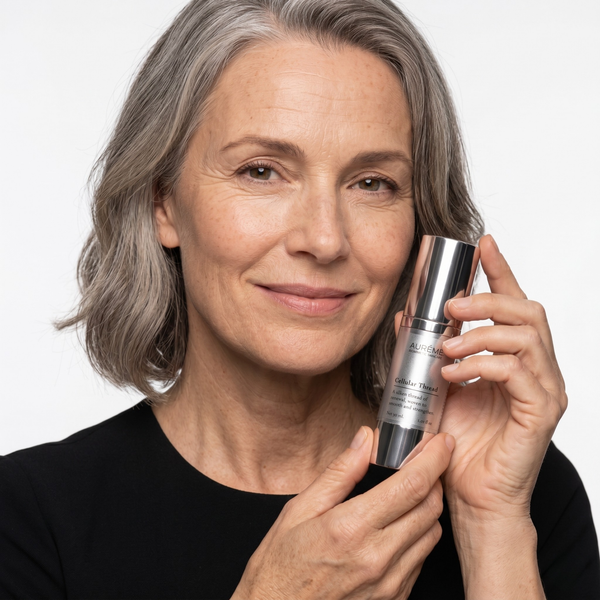
For those looking to simplify their regimen without compromising on efficacy, our [Cellular Thread](https://auremeskin.com.au/products/cellular-thread) peptide treatment serum was formulated with a bio-recognisable Cellular Peptide Complex and native Kakadu Plum to support skin longevity through a single, lightweight step. When paired with the barrier-sealing properties of [Cellular Crème](https://auremeskin.com.au/products/cellular-creme), this streamlined approach allows the skin to focus on its natural repair processes rather than managing a complex layering of competing actives.
FAQ
Can skinimalism actually improve acne-prone skin?
Yes, adopting a minimalist approach can be highly beneficial for acne-prone skin. Over-cleansing and the frequent application of multiple drying agents (like benzoyl peroxide and salicylic acid simultaneously) can damage the skin barrier, triggering compensatory sebum overproduction [1]. A simplified routine focused on a non-comedogenic cleanser and a targeted retinoid can stabilise the follicular environment more effectively than a complex 10-step regimen [6].
Is sunscreen enough for a minimalist morning routine?
In the Australian climate, a high-quality, broad-spectrum TGA-approved sunscreen is the most critical component of a minimalist routine. Many modern Australian sunscreens are formulated with moisturising bases like glycerine and hyaluronic acid, meaning they can function as both a hydrator and a primary defence against solar radiation [3]. Unless the skin is exceptionally dry, a separate moisturiser under SPF is often redundant [7].
How do I choose the 'best' active ingredients for a minimalist routine?
The best minimalist routine uses evidence-based 'gold standard' actives that offer multiple benefits. Retinoids (Vitamin A) remain the most researched for both anti-ageing and acne, while Niacinamide (Vitamin B3) is excellent for barrier repair and oil regulation [2]. By selecting products that combine these with stable Vitamin C, one can achieve comprehensive skin health without needing a dozen different bottles [8].
References:
[1] Levin J, Miller R. A Guide to the Dermal Barrier. J Clin Aesthet Dermatol. 2011;4(2):22-41.
[2] Draelos ZD. The science behind skincare: Cleansers and moisturizers. J Cosmet Dermatol. 2018;17(2):177-184. doi:10.1111/jocd.12490.
[3] Green AC, Williams GM. Skin Cancer Prevention in Australia. Photochem Photobiol. 2017;93(6):1346-1352. doi:10.1111/php.12826.
[4] Passeron T, et al. Adult skin maintenance: The role of a minimalist routine. JEADV. 2020;34(S6):15-22.
[5] Del Rosso JQ. The role of skin care as integral therapy in the management of acne. Cutis. 2013;92(6):281-287.
[6] Zaenglein AL, et al. Guidelines of care for the management of acne vulgaris. J Am Acad Dermatol. 2016;74(5):945-973.e33.
[7] Lott DL, et al. The efficacy and safety of sunscreen use. Australas J Dermatol. 2021;62(2):101-109.
[8] Pullar JM, et al. The Roles of Vitamin C in Skin Health. Nutrients. 2017;9(8):866. doi:10.3390/nu9080866.