The "sandwich method" is a dermatological technique designed to mitigate the irritant potential of potent retinoids, such as tretinoin or high-strength retinol, by layering the active ingredient between two applications of moisturiser. In this sequence, a thin layer of moisturiser is applied to cleansed skin, followed by the retinoid once the first layer has absorbed, and finally topped with a second layer of moisturiser. This approach creates a physical buffer that slows the rate of retinoid penetration into the stratum corneum, thereby reducing the risk of transepidermal water loss (TEWL) and the inflammatory response often termed 'retinisation' [1].
Evidence suggests that by incorporating occlusive and humectant ingredients before and after the retinoid, the skin barrier is reinforced, which significantly decreases common side effects such as erythema, desquamation, and pruritus [2]. While there is a common misconception that this method renders the retinoid ineffective, clinical observations indicate that the active molecule still reaches the nuclear receptors in the dermis, albeit at a controlled pace that aligns better with the skin's tolerance levels [3]. For Australian patients dealing with harsh environmental conditions that exacerbate skin dryness, this method is particularly beneficial for maintaining long-term compliance with prescription-grade retinoid therapies.
Retinoids work by binding to specific retinoic acid receptors (RARs) and retinoid X receptors (RXRs) within the skin cells, promoting cellular turnover and stimulating collagen synthesis. However, the initial phase of treatment often triggers a surge in pro-inflammatory cytokines, leading to a compromised epidermal barrier [1]. The sandwich method addresses this by utilising the rheological properties of emollients and humectants to stabilise the skin's lipid matrix.
From a formulation science perspective, the first layer of moisturiser increases the hydration of the stratum corneum, which can paradoxically increase penetration, but when formulated with occlusives like petrolatum or dimethicone, it provides a controlled-release effect. This modulation of the percutaneous absorption rate allows the skin to adapt to the retinoid without the acute inflammatory peak that causes visible peeling and sensitivity [4].
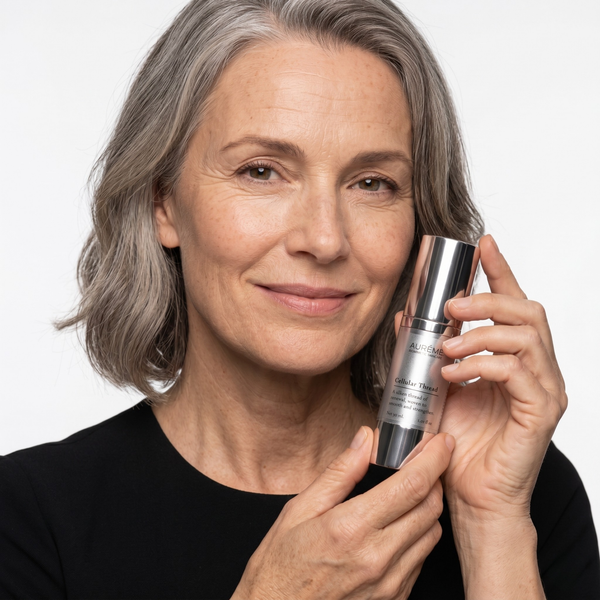
To maintain skin longevity while utilising this buffering technique, we formulated our Cellular Crème with a rich yet weightless blend of shea butter and a specialised peptide complex to provide the deep hydration and barrier sealing necessary for a safe retinoid experience. For those who find their skin feels particularly sensitised during active treatment, many of our customers choose to layer with Balance Biome Crème, which incorporates Bifida Ferment Lysate and niacinamide to support microbiome resilience and minimise the potential for redness.
FAQ
Does the sandwich method make retinoids less effective for anti-ageing?
There is no clinical evidence to suggest that the sandwich method significantly impairs the long-term efficacy of retinoids. While the peak concentration of the active ingredient may be reached more slowly, the cumulative dose delivered to the target cells remains sufficient to induce gene expression related to collagen production and epidermal thickening [2][3]. Compliance is the most critical factor in retinoid success; therefore, a buffered application that allows for daily use is more effective than an unbuffered application that forces the user to stop treatment due to irritation.
What type of moisturiser is best for the sandwich method?
For the base layer, a lightweight lotion containing ceramides, cholesterol, and fatty acids is ideal to mimic the skin's natural lipid barrier [4]. The top layer can be slightly more occlusive, containing ingredients like squalane or dimethicone to seal in the active. It is important to avoid using moisturisers containing other acids (like AHAs or BHAs) or high concentrations of urea in the sandwich, as these can increase irritation when combined with strong retinoids [5].
How long should I wait between applying the layers?
It is recommended to wait approximately 5 to 10 minutes between each layer. Applying a retinoid to damp skin can increase its penetration speed too rapidly, potentially causing irritation [1]. Ensuring the first layer of moisturiser is fully 'set' or absorbed before applying the retinoid helps maintain the integrity of the buffer [5].
References:
[1] Mukherjee S, et al. Retinoids in the treatment of skin aging: an overview of clinical efficacy and safety. Clinical Interventions in Aging. 2006;1(4):327-348. doi:10.2147/ciia.2006.1.4.327
[2] Draelos ZD, et al. The effect of a barrier-enhancing cosmetic moisturizer on the tolerance of a retinoid. Journal of Cosmetic Dermatology. 2019;18(5):1345-1350. doi:10.1111/jocd.12934
[3] Zasada M, Budzisz E. Retinoids: active molecules influencing skin structure formation in cosmetic and dermatological treatments. Postepy Dermatologii i Alergologii. 2019;36(4):392-397. doi:10.5114/ada.2019.87443
[4] Del Rosso JQ. The role of skin care as integral to the management of acne vulgaris. Journal of Clinical and Aesthetic Dermatology. 2013;6(12):19-27.
[5] Baldwin HE, et al. The importance of the skin barrier in skin disease and as a strategy for therapy. Journal of Drugs in Dermatology. 2013;12(12):1437-1441.