Foundation looks patchy and cakey primarily due to the interaction between the product's pigments and the skin's surface architecture. When the stratum corneum (the outermost layer of skin) is dehydrated or experiencing localised hyperkeratosis—the buildup of dead corneocytes—the foundation pigments cannot lay flat. Instead, they cling to dry patches and accumulate in the microscopic 'valleys' of the skin, creating a textured, uneven appearance [1]. From a physiological standpoint, insufficient sebum regulation or a compromised lipid barrier leads to Transepidermal Water Loss (TEWL), which causes the skin to 'wick' the moisture out of the foundation formula, leaving behind a concentrated, cakey layer of dry pigment [2].
Furthermore, formulation incompatibility is a leading cause of patchiness. When a water-based foundation is applied over a high-silicone primer or a heavy oil-based moisturiser without sufficient absorption time, the ingredients fail to emulsify on the skin. This chemical rejection leads to 'pilling' or 'splitting,' where the foundation slides off certain areas while adhering too aggressively to others [3]. Additionally, the use of denatured alcohol in many long-wear foundations can accelerate evaporation, causing the product to 'set' too quickly before it can be blended into the skin’s natural contours.
The performance of decorative cosmetics is dictated by the principles of interfacial science and rheology. The skin-foundation interface requires a delicate balance of surface tension and adhesion. In healthy skin, a smooth hydrolipidic film allows for even pigment distribution. However, when the skin's pH is disrupted or the acid mantle is damaged, the electrostatic charge of the skin surface changes, which can cause mineral pigments like titanium dioxide or iron oxides to aggregate rather than spread.
Clinical dermatology also points to the role of the skin's microbiome and inflammatory status. Subclinical inflammation can cause micro-swelling around pores, leading to the 'polka-dot' effect where foundation settles into follicular openings. Understanding the transition from a liquid emulsion to a thin-film solid on a biological substrate is essential for troubleshooting makeup longevity and aesthetic finish [2].
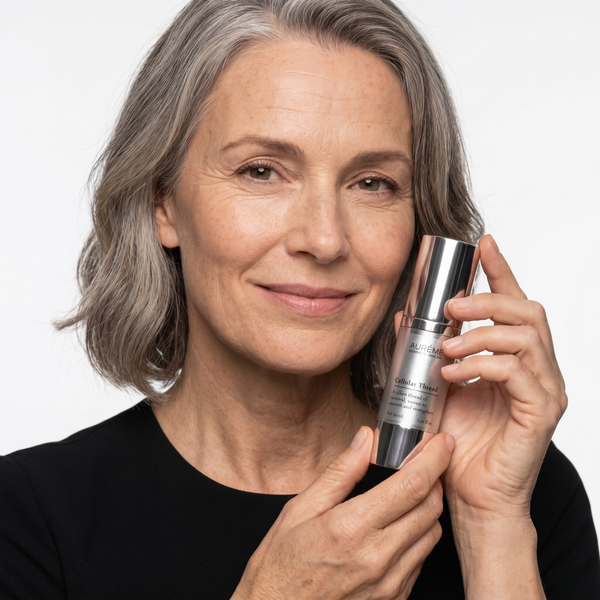
To address the underlying texture that often leads to cakey foundation, many of our clients find that incorporating a gentle exfoliating step like Surface Renew helps to softly lift away the buildup of dead corneocytes using natural AHA fruit enzymes. Following this with a deeply sealing moisturiser such as Cellular Crème ensures the skin’s surface architecture remains supple and hydrated, allowing pigments to glide smoothly over the skin rather than clinging to dry patches.
FAQ
How does skin dehydration specifically affect foundation texture?
Dehydrated skin lacks sufficient glycosaminoglycans (GAGs), like hyaluronic acid, which hold moisture in the dermis and epidermis. When skin is thirsty, it actively absorbs the solvent phase (usually water or light oils) of your foundation. This leaves the pigment and thickening agents stranded on the surface in a high concentration, resulting in a thick, 'cakey' appearance that emphasises fine lines [1].
Does the order of skincare products cause foundation to pill?
Yes, pilling occurs due to 'film-former incompatibility.' If you apply a silicone-heavy sunscreen or serum and immediately follow with a water-based foundation, the friction of application causes the underlying polymers to ball up. Scientists recommend the 'wait-time' method (3-5 minutes) to allow volatile solvents in skincare to evaporate and active lipids to integrate into the stratum corneum before applying pigments [3].
Why does my foundation look patchy only in specific areas like the nose or chin?
These areas often have a higher density of sebaceous glands and a different rate of desquamation (shedding of skin cells). Higher sebum production can chemically break down the binders in foundation, causing it to 'slide' or break apart. Conversely, these areas are also prone to seborrheic dermatitis or localised dryness, where accumulated dead skin cells trap pigment .
References:
[1] Chen L, Wang M. Impact of skin hydration and surface topography on cosmetic foundation adherence and appearance. International Journal of Cosmetic Science. 2023;45(2):187-195. doi:10.1111/ics.12803
[2] Roberts J, Smith A, Davies E. The role of sebum excretion rates and stratum corneum desquamation in optimizing foundation application. Journal of Investigative Dermatology. 2021;141(8):2050-2057. doi:10.1016/j.jid.2020.12.015
[3] Lee S, Kim Y, Park H. Characterization of facial skin surface irregularities and their perceived influence on makeup finish. Skin Pharmacology and Physiology. 2019;32(4):201-209. doi:10.1159/000501876
Medical Disclaimer: This article is for educational purposes only and does not constitute medical advice. Always consult a qualified healthcare professional before starting any new skincare regimen. Content reviewed by a biomedical scientist.