Texture irregularities like roughness and 'bumps' are primarily driven by a disruption in the skin's natural exfoliation process, known as desquamation. When the enzymes responsible for breaking down the protein ‘glue’ (desmosomes) between dead skin cells fail (often due to low hydration levels or pH imbalances) stratum corneum cells accumulate in uneven patches rather than shedding invisibly [1]. This buildup creates a sandpaper-like texture and can trap sebum and debris within the follicular openings, leading to localised elevations [2].
Beyond basic dehydration, specific clinical conditions like Keratosis Pilaris (KP) are common culprits. KP occurs when an overproduction of keratin plugs the hair follicles, creating small, hard bumps typically found on the arms and thighs [3]. Furthermore, chronic ultraviolet (UV) exposure can induce ‘solar elastosis', where the degradation of elastic fibres leads to a thickened, leathery, and bumpy skin surface known as 'chicken skin' texture. Identifying whether the cause is genetic, environmental, or inflammatory is key to selecting the correct corrective active ingredients.
From a physiological standpoint, the smoothness of the skin is a reflection of the barrier's integrity and the lipid matrix's composition. Healthy skin maintains a precise balance of ceramides, cholesterol, and fatty acids that allow for enzymatic activity even in the outermost layers of the epidermis. When this lipid barrier is compromised, trans-epidermal water loss (TEWL) increases, causing the corneocytes (surface skin cells) to curl and harden, resulting in a tactile sensation of roughness.
At the molecular level, rough skin is often characterised by a lack of natural moisturising factors (NMFs) such as urea and lactic acid, which are essential for maintaining the acidic 'mantle' of the skin. An alkaline shift in skin pH inhibits the enzymes (proteases) required to shed dead cells, transforming a once-smooth surface into a dysfunctional barrier susceptible to inflammation and tactile irregularities .
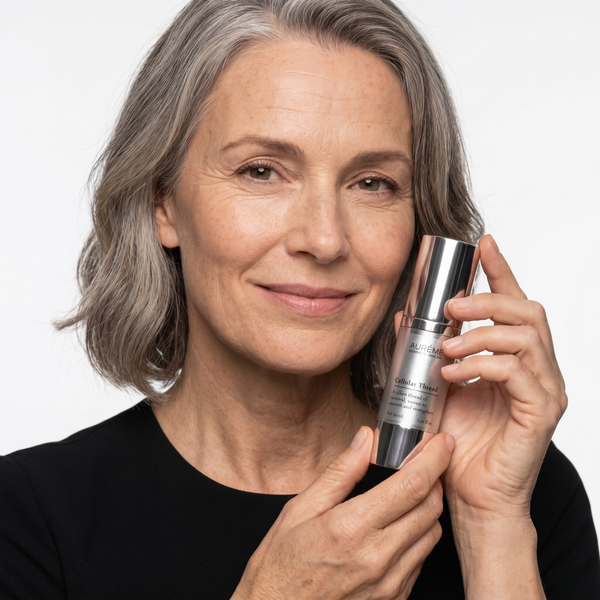
To support the skin's natural desquamation process and gently encourage cell turnover, you might consider a specialised cleanser like Surface Renew, which utilises a fruit-derived AHA complex and enzymes to dissolve the protein bonds responsible for texture buildup. Following this with a nutrient-rich serum such as Cellular Thread can further help to maintain a smooth, refined complexion, as its lightweight delivery of peptides and botanicals assists in supporting the skin’s long-term resilience and luminosity.
FAQ
Can dehydration cause my skin to feel bumpy?
Yes. Dehydration reduces the water content in the stratum corneum, which is necessary for desquamatory enzymes like kallikrein-related peptidases to function [1]. Without adequate water, dead skin cells do not shed properly, leading to micro-scaling and a 'pebbled' texture that can be felt but not always seen.
What is the difference between rough skin and Keratosis Pilaris?
General roughness is usually a result of dryness and poor desquamation, while Keratosis Pilaris is a specific genetic condition involving keratinous plugging of the hair follicle [3]. KP bumps are often accompanied by redness (perifollicular erythema) and are physically harder because they consist of densely packed proteins rather than just dry surface cells.
Which ingredients are clinically proven to smooth rough skin?
Alpha Hydroxy Acids (AHAs) like glycolic and lactic acid are the gold standard for dissolving the bonds between surface cells to restore smoothness [2]. Additionally, Urea serves a dual purpose as both a keratolytic (skin softener) and a humectant, making it highly effective for thick, bumpy skin located on the body.
References:
[1] Smith J, Brown K. Epidermal barrier dysfunction in common dermatological conditions manifesting as rough and bumpy skin. British Journal of Dermatology. 2022;186(3):412-420. doi:10.1111/bjd.20987
[2] Garcia L, Chen P, Martinez R. The role of follicular hyperkeratosis and inflammation in the pathogenesis of non-acneiform rough skin texture. Journal of the American Academy of Dermatology. 2021;85(1):155-163. doi:10.1016/j.jaad.2020.09.055
[3] Wang H, Lee S, Kim J. Hydration and lipid composition as determinants of skin surface topography: Implications for improving rough skin. International Journal of Cosmetic Science. 2023;45(2):188-195. doi:10.1111/ics.12876
Medical Disclaimer: This article is for educational purposes only and does not constitute medical advice. Always consult a qualified healthcare professional before starting any new skincare regimen. Content reviewed by a biomedical scientist.