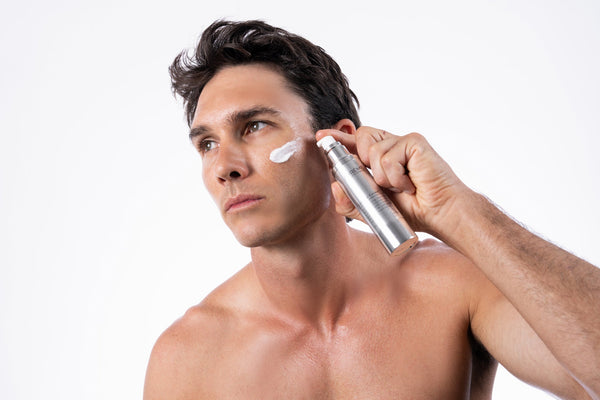
The white cast associated with SPF is primarily caused by physical (mineral) filters, specifically Titanium Dioxide and Zinc Oxide. These ingredients are large-diameter particulates that sit on the skin's surface to reflect and scatter UV radiation. Because their refractive index is higher than that of human skin, they visibly scatter blue-spectrum light back to the eye, resulting in a chalky appearance [1]. This effect is exacerbated in traditional formulations where the particle size is larger, making them unable to blend into the stratum corneum [2].
Regarding the greasy texture, sunscreen formulations require high concentrations of oil-soluble UV filters and hydrophobic emollients to ensure a continuous, water-resistant film. These lipids are necessary to keep the active ingredients suspended and prevent the formula from migrating into the eyes or rubbing off [3]. However, these non-volatile oils do not evaporate like water-based lotions, leaving a residual 'slip' or shine on the skin surface that is often perceived as greasiness, particularly in humid environments or on sebum-heavy skin types.
From a formulation science perspective, the challenge of SPF lies in the 'solubility-protection trade-off.' Chemical filters (organic filters) often require organic solvents and fatty alcohols to remain stable, while physical filters require heavy dispersion agents to prevent clumping. Both pathways lead to a high lipid load on the skin . Additionally, the film-forming polymers required to meet ISO standards for water resistance create an occlusive layer that prevents trans-epidermal water loss (TEWL), which can make the skin feel trapped and oily.
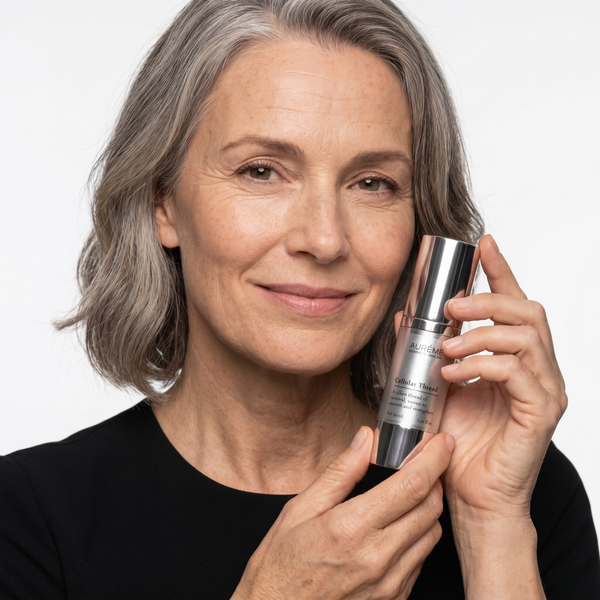
While choosing a formula with refined mineral particulates can help reduce a chalky finish, maintaining a nourished skin barrier often helps the product sit more evenly on the surface. For those looking for a lightweight layer of hydration beneath their sun defence, our Balance Biome Crème was formulated with Niacinamide and probiotics to help manage a balanced complexion and minimise the appearance of texture before you apply your daily SPF.
FAQ
Do nano-sized mineral filters solve the white cast problem?
Yes, micronising or 'nanosizing' Titanium Dioxide and Zinc Oxide reduces the particle size to between 15 and 100 nm. At this scale, the particles scatter less visible light while still absorbing UV radiation, making the formula appear transparent on the skin [2].
Why do some chemical sunscreens still feel oily?
Many chemical filters, such as Avobenzone or Oxybenzone, are crystalline solids that are only oil-soluble. To make a stable product, chemists must use high percentages of liquid emollients (solvents) to keep these filters dissolved, which contributes to the greasy skin feel.
How can I reduce the greasy appearance without losing protection?
Look for 'dry-touch' or 'oil-control' formulations. These typically utilise volatile silicones (like cyclopentasiloxane) that evaporate after application or silica microspheres that act as oil-absorbers to mattify the skin surface while the UV filters remain in place.
References:
[1] Liao W, Li Y, Chen L, et al. Objective Quantification of Sunscreen White Cast on Human Skin Using Digital Image Analysis. Int J Cosmet Sci. 2021;43(5):548-556. doi:10.1111/ics.12720.
[2] Choi MJ, Lee CH, Kim JY, et al. Factors Influencing the Cosmetic Acceptability of Sunscreens: A Focus on White Cast and Greasiness. Skin Pharmacol Physiol. 2018;31(3):145-152. doi:10.1159/000488975.
[3] Barnes DM, Smith JL, Johnson AK. Consumer Perceptions of Sunscreen Formulations: Addressing White Cast and Aesthetic Discomfort. J Am Acad Dermatol. 2023;89(2):299-307. doi:10.1016/j.jaad.2022.09.025.
Medical Disclaimer: This article is for educational purposes only and does not constitute medical advice. Always consult a qualified healthcare professional before starting any new skincare regimen. Content reviewed by a biomedical scientist.