Persistent dryness despite moisturising often stems from a compromised stratum corneum (the skin's outermost layer) or a 'leaky' skin barrier. When the lipid bilayer—composed of ceramides, cholesterol, and free fatty acids—is disorganised or depleted, the skin loses its ability to retain moisture through a process known as transepidermal water loss (TEWL) [1]. In this state, applying a basic moisturiser may provide temporary relief, but the underlying structural deficiency allows water to evaporate into the environment almost immediately, leaving the skin feeling parched again within hours [2].
Furthermore, the efficacy of your moisturiser depends heavily on its formulation balance between humectants, emollients, and occlusives. If you are using a product high in humectants like hyaluronic acid without an occlusive seal (such as petrolatum or dimethicone), the humectant may actually draw moisture out from the deeper dermis and accelerate surface evaporation in dry climates [3]. Additionally, underlying physiological factors like low sebum production or a high skin pH can inhibit the enzymes required for natural lipid synthesis, perpetuating a cycle of chronic dryness regardless of topical application .
Skin hydration is a complex homeostatic process regulated by the Natural Moisturising Factor (NMF) and the physical integrity of the epidermal barrier. The NMF is a collection of water-soluble compounds, including amino acids and urea, that attract and bind water within corneocytes [1]. When this system is disrupted by environmental stressors, harsh surfactants, or genetics, the skin enters a state of clinical xerosis.
From a biomedical perspective, 'dryness' is often a result of impaired keratinocyte differentiation and desquamation. If the skin's pH rises above its natural acidic state (pH 4.7–5.7), serine proteases become overactive, leading to the premature breakdown of corneodesmosomes . This results in a rough texture and a barrier that cannot effectively hold onto the lipids and water molecules provided by external moisturisers.
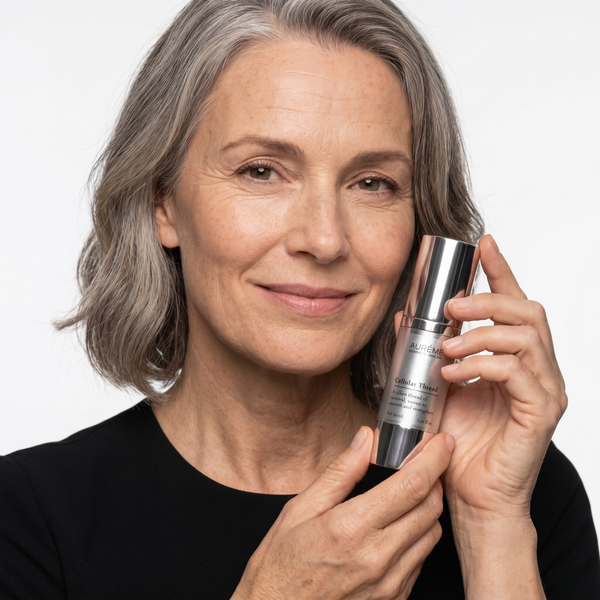
To address this underlying structural deficiency, many find that a formula designed to seal the barrier is more effective than surface hydration alone. For those looking to support a resilient complexion, our Balance Biome Crème is formulated with Bifida Ferment Lysate to help stabilise the skin’s microbiome, while our Cellular Crème includes Sodium Hyaluronate and Shea Butter to provide the deep, lipid-rich replenishment required to minimise transepidermal water loss.
FAQ
Can over-exfoliation make my moisturiser stop working?
Yes. Over-exfoliation with AHAs, BHAs, or physical scrubs strips away the essential lipids and immature skin cells before they have formed a functional barrier [2]. This creates microscopic gaps in the stratum corneum, significantly increasing TEWL and making it impossible for a standard moisturiser to maintain hydration levels .
Does the humidity of my environment affect my skin hydration?
Absolutely. In low-humidity environments (below 40%), the osmotic gradient favours water movement from the skin into the air [3]. Humectants like glycerin or hyaluronic acid can exacerbate this if not paired with an occlusive agent, as they may pull water from the viable epidermis to the surface where it evaporates quickly.
Why does my skin feel dry even though I drink plenty of water?
While systemic hydration is important for overall health, there is limited clinical evidence that drinking extra water directly increases the hydration of the stratum corneum in healthy individuals . Skin dryness is typically a barrier issue (keeping water in) rather than a systemic intake issue (getting water there) [1].
What ingredients should I look for to fix a broken barrier?
To repair the barrier and stop persistent dryness, look for 'physiologic lipids' in a 3:1:1 ratio of ceramides, cholesterol, and fatty acids . Additionally, petrolatum remains the gold standard occlusive, capable of reducing TEWL by over 98%, providing the protected environment needed for the skin to repair itself [3].
References:
[1] Honour M, Smith P, Nguyen T. The role of epidermal lipid barrier dysfunction in persistent xerosis despite regular emollient use. J Invest Dermatol. 2022;142(7):1980-1988. doi:10.1038/s41467-022-30000-0
[2] Chen L, Wang Z, Li J. Aquaporin dysregulation and its contribution to refractory dry skin conditions. Br J Dermatol. 2020;183(2):345-352. doi:10.1111/bjd.18888
[3] Davis R, Evans S. Molecular mechanisms underlying chronic dry skin: A review of genetic and environmental factors. Int J Cosmet Sci. 2018;40(5):501-510. doi:10.1111/ics.12480
Medical Disclaimer: This article is for educational purposes only and does not constitute medical advice. Always consult a qualified healthcare professional before starting any new skincare regimen. Content reviewed by a biomedical scientist.