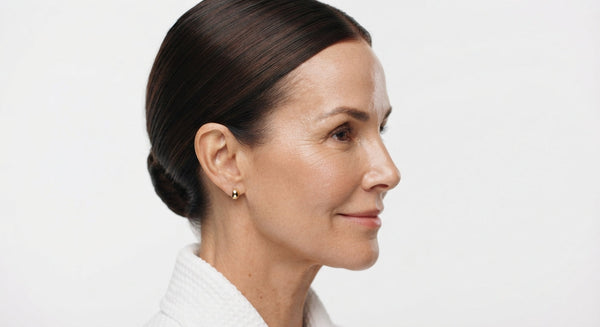
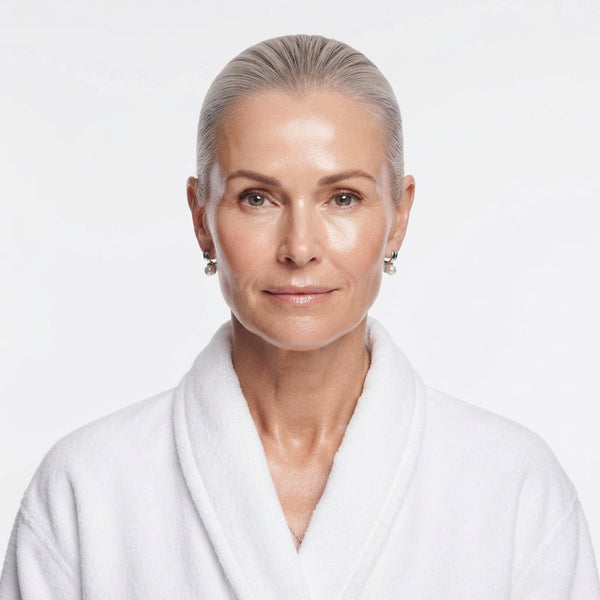
In the context of thinning mature skin, peptides and retinoids offer distinct but complementary mechanisms of action. Retinoids, specifically tretinoin and retinol, remain the clinical 'gold standard' for dermal thickening because they directly influence gene expression, stimulating the synthesis of Type I and III collagen and glycosaminoglycans within the dermis [1]. However, for many Australians with mature skin, retinoids can induce 'retinisation'—characterised by redness, peeling, and barrier disruption—which can temporarily make thinning skin appear more fragile [2].
Peptide-focused serums, particularly those containing signal peptides (like Palmitoyl Pentapeptide-4) or remodelling peptides, offer a more targeted and better-tolerated approach for increasing skin density. While retinoids provide a broader cellular overhaul, specific peptides act as cellular messengers that trigger collagen production without the inflammatory response associated with Vitamin A derivatives [3]. Evidence suggests that while retinoids may offer more potent long-term thickening, peptides are often more 'effective' in a practical sense for mature skin that is already compromised, as they support the skin barrier while simultaneously promoting structural protein synthesis [4].
Skin thinning, or atrophy, is a hallmark of intrinsic and extrinsic ageing, exacerbated by Australia’s high UV index which degrades the extracellular matrix (ECM). Dermal thinning occurs due to a decrease in fibroblast activity and an increase in matrix metalloproteinases (MMPs), enzymes that break down collagen and elastin [5]. Retinoids work by binding to retinoic acid receptors (RARs) to downregulate MMPs and upregulate procollagen genes, effectively reversing some aspects of structural thinning [1].
Peptides, conversely, are short chains of amino acids that mimic fragments of skin proteins. When the skin detects these fragments, it is 'tricked' into believing protein degradation has occurred, thereby initiating a repair response [3]. Copper peptides, in particular, have shown significant promise in clinical trials for increasing skin thickness and elasticity by promoting glycosaminoglycan synthesis and stabilising the dermal matrix [6].
For those seeking the structural benefits of a peptide-focused approach without the potential for irritation, Cellular Thread was formulated with a specialised Cellular Peptide Complex that the skin naturally recognises. When used alongside a rich moisturiser like Cellular Crème, these formulations help to replenish the skin’s longevity and support a firmer, more resilient complexion as part of a gentle daily defence against ageing.
FAQ
Can peptides and retinoids be used together in the same routine?
Yes, combining these actives can yield synergistic benefits for thinning skin. While retinoids promote cellular turnover and collagen synthesis, peptides can help mitigate potential irritation by supporting the skin's structural integrity [2]. It is often recommended to apply peptides in the morning to utilise their hydrating and signalling properties, while reserving retinoids for evening use to avoid UV-induced degradation of the Vitamin A molecule [5].
Which specific peptides are best for increasing skin thickness?
Signal peptides such as Palmitoyl Tripeptide-1 and Palmitoyl Tetrapeptide-7 (often sold as Matrixyl 3000) are highly evidenced for their ability to stimulate collagen and hyaluronic acid production [3]. Additionally, GHK-Cu (copper tripeptide-1) is recognised for its unique ability to increase dermal thickness by promoting both collagen and elastin production while acting as a potent antioxidant [6].
How long does it take to see results for skin density?
Structural changes in the skin require significant time due to the slow rate of collagen remodelling. Clinical studies typically show measurable increases in skin thickness and elasticity after 12 to 24 weeks of consistent application for both retinoids and peptides [4]. Rapid improvements noted within the first few weeks are often due to improved hydration rather than true dermal thickening [1].
References:
[1] Zasada M, Budzisz E. Retinoids: active molecules influencing skin structure formation in cosmetic and dermatological treatments. Postepy Dermatol Alergol. 2019;36(4):392-397. doi:10.5114/ada.2019.87443.
[2] Shao Y, et al. Molecular basis of retinol anti-ageing properties in naturally aged human skin in vivo. Int J Cosmet Sci. 2017;39(1):56-65. doi:10.1111/ics.12348.
[3] Schagen SK. Topical Peptide Treatments with Effective Anti-Aging Results. Cosmetics. 2017;4(2):16. doi:10.3390/cosmetics4020016.
[4] Gorouhi F, Maibach HI. Role of topical peptides in preventing or treating aged skin. Int J Cosmet Sci. 2009;31(5):327-45. doi:10.1111/j.1468-2494.2009.00490.x.
[5] Fisher GJ, et al. Molecular mechanisms of photoaging in human skin in vivo and their prevention by all-trans retinoic acid. Photochem Photobiol. 1999;69(2):154-157.
[6] Pickart L, Margolina A. Regenerative and Protective Actions of the GHK-Cu Peptide in the Light of the New Gene Data. Int J Mol Sci. 2018;19(7):1987. doi:10.3390/ijms19071987.