Hyaluronic Acid (HA) is a naturally occurring glycosaminoglycan found in the skin's extracellular matrix, functioning primarily as a humectant that can bind up to 1,000 times its weight in water [1]. By drawing moisture into the stratum corneum, it increases skin hydration, improves elasticity, and temporarily reduces the appearance of fine lines and wrinkles. Its ability to maintain tissue hydrodynamics is crucial for cellular signaling and structural integrity, making it a cornerstone ingredient for managing skin dehydration [2].
Regarding application, it is scientifically optimal to apply Hyaluronic Acid to damp or slightly wet skin rather than bone-dry skin. Because HA is a powerful humectant, it seeks moisture to bind to. In low-humidity environments, such as air-conditioned Australian offices or dry winter climates, HA applied to dry skin may actually draw moisture out from the deeper layers of the dermis to satisfy its binding capacity, potentially leading to increased transepidermal water loss (TEWL) [3]. Applying it to damp skin provides an immediate external water source for the molecule to grip, ensuring the skin remains plumped and hydrated from the outside in [4].
From a biochemical perspective, Hyaluronic Acid exists in various molecular weights, each interacting with the skin barrier differently. High molecular weight HA (HMW-HA) forms a non-occlusive film on the surface, preventing moisture evaporation, while low molecular weight HA (LMW-HA) can penetrate deeper into the epidermal layers to stimulate endogenous HA production and support wound healing [1][5].
In the context of the Australian climate, the efficacy of topical HA is heavily influenced by ambient humidity. Scientific consensus suggests that for humectants to function effectively, they must be paired with occlusive agents—such as ceramides or petrolatum—to 'seal' the hydration provided by the HA. Without this occlusive layer, the water bound by HA to the skin surface can easily evaporate, a process known as evaporative cooling that may leave the skin feeling tighter than before application [2][6].
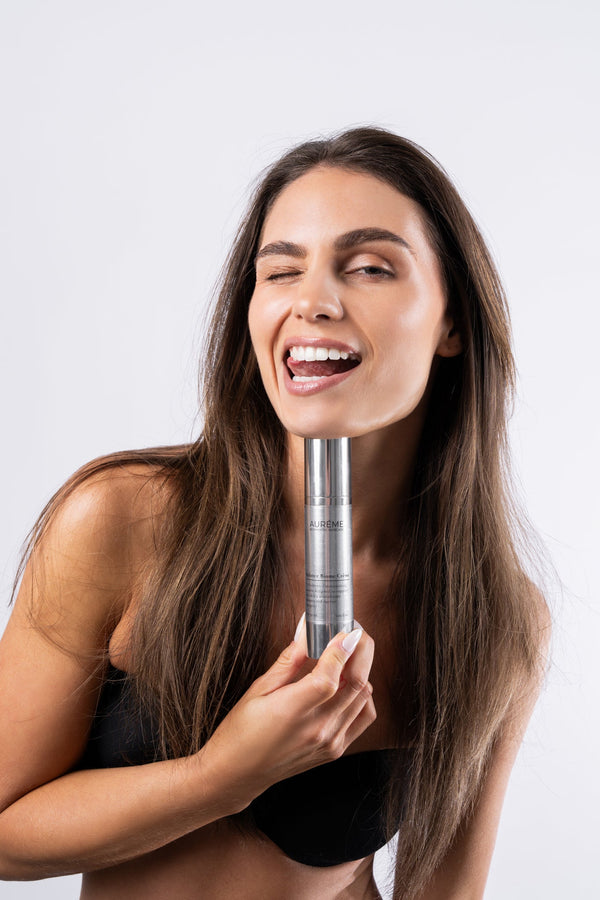
To ensure these water-binding properties are effectively sealed into the skin, you might consider a formulation like [Cellular Crème](https://auremeskin.com.au/products/cellular-creme), which utilises Sodium Hyaluronate alongside a Cellular Peptide Complex to support firmness and deep hydration. For those focused on maintaining a resilient barrier while addressing dehydration, [Circadia Shield](https://auremeskin.com.au/products/circadia-shield) also incorporates this humectant to help the skin recover from environmental stressors and maintain its natural suppleness.
FAQ
Does the molecular weight of Hyaluronic Acid matter for Australian skin?
Yes, molecular weight significantly dictates the depth of penetration and biological response. HMW-HA (approx. 1,500 kDa) stays on the surface to provide instant hydration and barrier defence, whereas LMW-HA (under 50 kDa) can penetrate the stratum corneum to modulate inflammatory responses and promote collagen synthesis [5]. A multi-molecular weight serum is often recommended to address both surface dehydration and long-term skin health [7].
Should I apply a moisturiser over Hyaluronic Acid?
Absolutely. Hyaluronic Acid is a humectant, not an occlusive. To prevent the moisture that HA has drawn to the surface from evaporating into the dry Australian air, you must apply an emollient or occlusive moisturiser over the top [3]. This 'locks in' the hydration and ensures the skin barrier remains intact and supple [4].
Can Hyaluronic Acid cause irritation in dry climates?
While HA is generally non-irritating, applying it to very dry skin in a low-humidity environment without a follow-up moisturiser can cause a 'rebound' dryness. This happens when the HA draws water from the viable epidermis because there is no atmospheric moisture available, leading to temporary tightness and irritation [6][8].
References:
[1] Papakonstantinou E, et al. Hyaluronic acid: A key molecule in skin aging. Dermato-Endocrinology. 2012;4(3):253-258. doi:10.4161/derm.21923
[2] Bukhari SNA, et al. Hyaluronic acid, a promising skin rejuvenating biomaterial: A review of recent updates. International Journal of Biological Macromolecules. 2018;120(Pt B):1682-1695. doi:10.1016/j.ijbiomac.2018.09.188
[3] Draelos ZD. The science behind skin care: Humectants. Journal of Cosmetic Dermatology. 2018;17(2):161-163. doi:10.1111/jocd.12490
[4] Rawlings AV, et al. Stratum corneum moisturization at the molecular level. Skin Pharmacology and Physiology. 2004;17(5):207-222. doi:10.1159/000080213
[5] Pavicic T, et al. Efficacy of cream-based novel formulations of hyaluronic acid of different molecular weights in anti-wrinkle treatment. Journal of Drugs in Dermatology. 2011;10(9):990-1000.
[6] Sethi A, et al. Moisturizers: The Slippery Road. Indian Journal of Dermatology. 2016;61(3):279-287. doi:10.4103/0019-5154.182427
[7] Jegasothy SM, et al. Efficacy of a New Topical Nano-hyaluronic Acid in Humans. The Journal of Clinical and Aesthetic Dermatology. 2014;7(3):27-29.
[8] Ananthapadmanabhan KP, et al. Cleansing without compromise: the impact of cleansers on the skin barrier and the role of lipids and humectants. Dermatologic Therapy. 2004;17(s1):16-25. doi:10.1111/j.1396-0296.2004.04s1002.x
Medical Disclaimer: This article is for educational purposes only and does not constitute medical advice. Always consult a qualified healthcare professional before starting any new skincare regimen. Content reviewed by a biomedical scientist.