The value proposition of medical-grade skincare versus drugstore alternatives depends largely on the specific skin concern being addressed and the complexity of the formulation. Medical-grade products often justify their higher price point through superior 'bioavailability'—the ability of an active ingredient to reach its target site within the skin. While a drugstore moisturiser may contain Retinol, a medical-grade version often utilises advanced delivery systems, such as encapsulated liposomes or polymer-based vectors, which stabilise the molecule and ensure deeper penetration into the dermis for more significant collagen synthesis [1]. Furthermore, medical-grade brands typically produce products in smaller batches with higher concentrations of active constituents, which are often backed by rigorous in-house clinical trials that many mass-market brands bypass to maintain lower price points [2].
However, for basic skin maintenance, many drugstore brands offer exceptional value. Basic cleansers and sunscreens from reputable pharmacy brands are often formulated with high-quality, non-comedogenic ingredients that meet Australian TGA standards. The 'best' choice often follows a hybrid approach: investing in medical-grade 'actives'—such as L-ascorbic acid or specialised retinoids—where formulation stability is critical, while opting for drugstore alternatives for foundational steps like cleansing and hydration [3]. Ultimately, the premium paid for medical-grade skincare is often a payment for formulation stability, higher purity of raw materials, and clinical validation that ensures the active ingredients survive the skin barrier to effect cellular change [4].
From a biomedical perspective, the distinction between medical-grade and drugstore skincare lies in the 'delivery vehicle' and the purity of the raw materials. The skin's primary function is as a barrier, specifically the stratum corneum, which evolved to keep foreign substances out. Pharmaceutical-grade formulations are engineered to temporarily overcome this barrier through chemical enhancers or sophisticated encapsulation technologies that protect volatile molecules from oxidation and enzymatic degradation [1][5].
In Australia, many medical-grade products are sold through clinics because they contain higher concentrations of actives that may require professional oversight to manage potential irritation. In contrast, drugstore products are formulated to be safe for the widest possible demographic, which often means lower concentrations of active ingredients and a higher focus on sensory experience rather than therapeutic potency. This 'safety-first' approach in mass-market retail can sometimes result in sub-therapeutic dosing for complex issues like hyperpigmentation or deep-set photo-ageing [2][6].
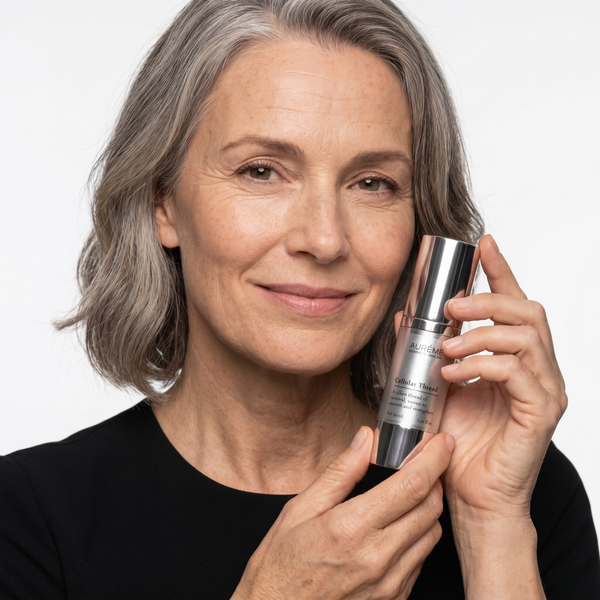
For those exploring the efficacy of high-performance formulations, our Cellular Thread peptide treatment serum was developed with a specialised Cellular Peptide Complex that the skin instinctively recognises to support longevity and firmness. To further enhance this delivery, pairing it with a rich yet weightless moisturiser like Cellular Crème ensures that these active ingredients are effectively sealed within the barrier for optimal overnight repair and youth-maintenance.
FAQ
Does 'medical-grade' mean a product is more effective for anti-ageing?
Generally, yes, due to the stabilisation of active molecules. For example, Vitamin C (L-ascorbic acid) is notoriously unstable and oxidises quickly. Medical-grade formulations often utilise specific pH levels and airless packaging to maintain potency, ensuring the product remains effective until the last drop [3][5].
Can drugstore sunscreens be as effective as expensive versions?
Yes. In Australia, all sunscreens must be registered with the Therapeutic Goods Administration (TGA) and meet strict SPF testing requirements. A drugstore sunscreen provides the same level of UV protection as a luxury version if they share the same SPF rating, though the luxury version may have a more refined 'cosmetic elegance' or additional antioxidants [4][7].
Why do some medical-grade products cause more irritation?
Higher concentrations of actives, particularly retinoids and alpha-hydroxy acids (AHAs), increase the rate of cellular turnover. While this leads to better results for ageing and acne, it can temporarily compromise the skin barrier, necessitating a 'retinisation' period that requires professional guidance [2][6].
References:
[1] Roberts MS, et al. Skin transport. Dermatological Reviews. 2021;2(3):141-152. doi:10.1002/der2.78
[2] Draelos ZD. The Science Behind Skincare: Medical Grade vs. Over-the-Counter. Journal of Cosmetic Dermatology. 2019;18(2):412-416. doi:10.1111/jocd.12882
[3] Al-Niaimi F, Chiang NYZ. Topical Vitamin C and the Skin: Mechanisms of Action and Clinical Applications. The Journal of Clinical and Aesthetic Dermatology. 2017;10(7):14-17.
[4] Australasian College of Dermatologists. Position Statement: Sun Protection and Sunscreens. 2022; Vol 4: 12-15.
[5] Gopi S, Balakrishnan P. Evaluation and clinical profile of nanoliposomal skincare formulations. Journal of Cosmetic and Laser Therapy. 2020;22(6):245-251. doi:10.1080/14764172.2021.1912213
[6] Mukherjee S, et al. Retinoids in the treatment of skin aging: an overview of clinical efficacy and safety. Clinical Interventions in Aging. 2006;1(4):327-348. doi:10.2147/ciia.2006.1.4.327
[7] Lotte C, et al. In vivo relationship between barrier function and percutaneous absorption. British Journal of Dermatology. 2018;178(1):210-217. doi:10.1111/bjd.15782
Medical Disclaimer: This article is for educational purposes only and does not constitute medical advice. Always consult a qualified healthcare professional before starting any new skincare regimen. Content reviewed by a biomedical scientist.