Clinical chemical peels and at-home exfoliants differ primarily in their pH levels, acid concentrations, and intended depth of penetration into the cutaneous layers. At-home exfoliants are formulated for safety and gradual results, typically featuring hydroxy acids (AHAs or BHAs) at concentrations between 2% and 10% with a pH level generally above 3.5. These products work superficially to dislodge corneocytes in the stratum corneum, promoting a smoother skin texture and enhanced radiance without significant downtime [1], [2].
In contrast, clinical chemical peels are specialised procedures performed by dermatologists or dermal clinicians using much higher concentrations (up to 70%) and significantly lower pH levels, often below 2.0. This lower pH increases the bioavailability of the free acid, allowing the solution to penetrate beyond the epidermis and into the papillary or reticular dermis. By inducing a controlled chemical injury, these professional treatments trigger a robust wound-healing response, stimulating neocollagenesis and the production of new extracellular matrix components that at-home products cannot achieve [3], [4].
From a biochemical perspective, the efficacy of an acid is determined by its pKa value relative to the formulation's pH. When the pH is lower than the pKa, more acid exists in its non-ionised, lipophilic form, allowing it to penetrate the skin's lipid barrier more effectively. Clinical peels exploit this by using unbuffered or partially buffered solutions to maximise the 'free acid' content, leading to protein coagulation and epidermolysis [1], [5].
Furthermore, the selection of the agent dictates the mechanism of action. Salicylic acid, being lipophilic, targets the pilosebaceous unit, making it ideal for acne-prone skin, whereas Glycolic acid's small molecular size allows for deep dermal stimulation. Professional application allows for the 'frosting' phenomenon—the precipitation of proteins—to be monitored by a clinician to prevent permanent scarring or pigmentary changes, a safety threshold that at-home products are designed never to reach [2], [4].
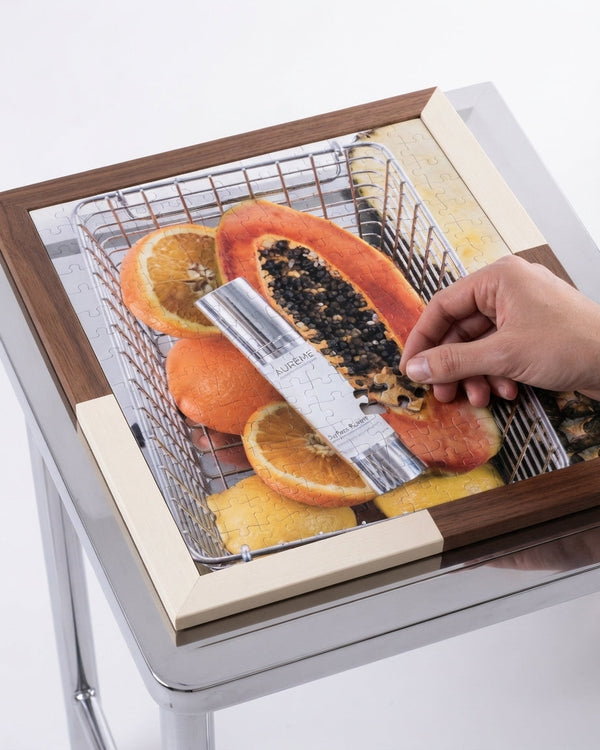
For those seeking to maintain a refined texture between professional treatments, Surface Renew offers a gentle daily approach to cell turnover through its specialised AHA Fruit Complex and natural enzymes. If your focus is instead on managing congestion, Surface Purify provides a targeted alternative, utilising Salicylic Acid to clarify the skin while ensuring the barrier remains supported and resilient.
FAQ
Are at-home peels just as effective as clinical treatments over a longer period?
While consistent use of at-home exfoliants can significantly improve skin texture and tone, they cannot replicate the structural remodelling achieved by clinical peels. Deep clinical peels reach the dermis to address severe photo-ageing and deep scarring, whereas at-home products are limited to the superficial epidermis to ensure user safety and minimise the risk of chemical burns [3], [6].
What are the risks of using professional-strength peels at home?
Using clinical-grade acids without professional supervision poses severe risks, including post-inflammatory hyperpigmentation (PIH), permanent scarring, and secondary infections. Professionals assess skin phototype using the Fitzpatrick scale to adjust contact time and neutralisation, which is critical for preventing adverse reactions in melanin-rich skin [4], [5].
How should I prepare my skin for a clinical chemical peel?
Preparation typically involves a 'priming' phase using low-strength at-home exfoliants (like 5-8% glycolic acid) and tyrosinase inhibitors for 2-4 weeks prior to the procedure. This process thins the stratum corneum for even penetration of the peel and suppresses melanocyte activity to reduce the risk of PIH [2], [6].
References:
[1] Tasneem S, et al. Journal of Cosmetic Dermatology. 2022;21(10):4145-4155. doi:10.1111/jocd.15243
[2] O'Connor AA, et al. Australasian Journal of Dermatology. 2018;59(3):171-181. doi:10.1111/ajd.12715
[3] Soleymani T, et al. The Journal of Clinical and Aesthetic Dermatology. 2018;11(8):21-28.
[4] Kachiu L, et al. International Journal of Women's Dermatology. 2021;7(2):145-152. doi:10.1016/j.ijwd.2020.12.005
[5] Anitha B. Journal of Cutaneous and Aesthetic Surgery. 2010;3(3):139-144. doi:10.4103/0974-2077.74490
[6] Truitt A, et al. Dermatologic Surgery. 2020;46(12):1556-1564. doi:10.1097/DSS.0000000000002500
Medical Disclaimer: This article is for educational purposes only and does not constitute medical advice. Always consult a qualified healthcare professional before starting any new skincare regimen. Content reviewed by a biomedical scientist.