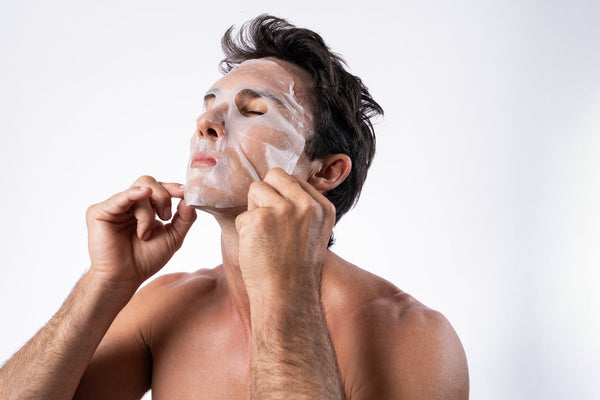
To accurately determine your skin type, the most reliable clinical approach is the 'Bare-Faced Method'. Begin by cleansing your face with a mild, pH-balanced cleanser to remove sebum, debris, and environmental pollutants without compromising the stratum corneum barrier. Gently pat the skin dry and refrain from applying any moisturisers, serums, or active treatments for at least 60 to 90 minutes. During this period, stay in a controlled indoor environment to avoid external variables like humidity or wind chill affecting your skin's physiological response [1].
After the observation period, evaluate your skin's behaviour. Oily skin will exhibit visible shine and a lipid film across the entire face, particularly the forehead, nose, and chin (the T-zone). Dry skin will feel tight, appear dull, and may show fine dehydration lines or flaking due to insufficient sebum production and transepidermal water loss (TEWL) [2]. Combination skin typically displays an oily T-zone alongside dry or normal cheeks. Normal skin remains comfortable and supple, with no significant oiliness or tightness. Sensitive skin is characterised by subjective sensations like stinging or burning, often accompanied by objective clinical signs like erythema (redness) when exposed to topical products or environmental shifts [3].
Skin typing is traditionally based on the Baumann Skin Type System and the Fitzpatrick scale, though the former focuses more on physiology than UV reactivity. The primary biological determinant of skin type is the activity of the sebaceous glands and the integrity of the epidermal permeability barrier. Sebum, a complex mixture of triglycerides, wax esters, and squalene, provides lubrication and antimicrobial defence; however, overproduction (seborrhoea) leads to the oily phenotype, while underproduction results in xerosis [1][4].
Furthermore, the skin's hydration level is distinct from its oil content. While oiliness is regulated by hormonal signals such as dihydrotestosterone (DHT) acting on sebocytes, skin dryness is often a result of deficient Natural Moisturising Factors (NMFs) and structural lipids like ceramides and cholesterol within the lipid lamellae [2]. Recognising these biochemical differences is essential for Australian consumers, as the local climate—ranging from high humidity in the north to arid conditions in the south—can acutely modulate the skin's barrier function and perceived type [5].
For those navigating the complexities of a sensitive or combination profile during this assessment, selecting a formula that respects the skin’s delicate ecosystem is essential. You might consider an option like Surface Calm, a ceramide-based cleanser designed to maintain the integrity of the stratum corneum, or Balance Biome Crème, which incorporates probiotic lysates to support a resilient and harmonious complexion.
FAQ
Can my skin type change over time or with the seasons?
Yes, skin type is not static and is influenced by chronological ageing, hormonal fluctuations, and environmental variables. As we age, sebaceous gland activity naturally declines, often shifting oily or normal skin toward the dry spectrum [4]. Additionally, Australian seasonal shifts play a role; high humidity in summer can increase sebum fluidity and perceived oiliness, while low humidity and indoor heating in winter can accelerate transepidermal water loss, causing temporary dehydration or a shift toward a dry phenotype [5].
What is the difference between dry skin and dehydrated skin?
In clinical dermatology, 'dry skin' is a skin type characterised by a lack of oil (sebum) production, whereas 'dehydrated skin' is a temporary condition involving a lack of water in the stratum corneum [2]. Even oily skin can become dehydrated if the skin barrier is compromised by harsh surfactants or environmental stressors. Dehydrated skin often presents as 'crepey' or shows fine lines when gently pinched, regardless of the underlying lipid levels [1].
How does sensitive skin differ from an allergic reaction?
Sensitive skin is typically defined by hyper-reactivity to environmental factors or topical products due to a compromised barrier or heightened sensory nerve response [3]. It is a chronic state of low-threshold irritation. In contrast, an allergic reaction (allergic contact dermatitis) is an immune-mediated Type IV hypersensitivity response to a specific allergen, such as a particular fragrance or preservative, resulting in intense itching and inflammation that may take days to resolve [6].
References:
[1] Baumann L. Understanding and Treating Sensitive Skin. Dermatologic Clinics. 2008;26(3):359-373. doi:10.1016/j.det.2008.03.008
[2] Verdier-Sévrain S, Bonté F. Skin hydration: a review on its molecular mechanisms. Journal of Cosmetic Dermatology. 2007;6(2):75-82. doi:10.1111/j.1473-2165.2007.00300.x
[3] Misery L, et al. Sensitive skin: psychologic effects and seasonal changes. Journal of the European Academy of Dermatology and Venereology. 2008;22(5):620-624. doi:10.1111/j.1468-3083.2007.02554.x
[4] Makrantonaki E, et al. Genetics and skin aging. Dermato-Endocrinology. 2012;4(3):280-284. doi:10.4161/derm.22372
[5] Darlenski R, et al. The effect of the environment on the skin. Clinics in Dermatology. 2011;29(3):231-236. doi:10.1016/j.clindermatol.2010.09.020
[6] Fonacier L, et al. Contact Dermatitis: A Practice Parameter Update. The Journal of Allergy and Clinical Immunology: In Practice. 2015;3(3):S1-S39. doi:10.1016/j.jaip.2015.02.009
Medical Disclaimer: This article is for educational purposes only and does not constitute medical advice. Always consult a qualified healthcare professional before starting any new skincare regimen. Content reviewed by a biomedical scientist.