Yes, LED (Light Emitting Diode) light therapy is clinically effective for both acne management and collagen stimulation, provided the correct wavelengths and energy densities are utilised. For acne, blue light (typically 415nm) is the primary driver of efficacy. It works by targeting Porphyrins produced by Cutibacterium acnes (C. acnes) bacteria; when these Porphyrins absorb blue light, they release free radicals that selectively destroy the bacteria without damaging surrounding tissue [1]. Research indicates that combining blue light with red light (633nm) often yields superior results for inflammatory acne by reducing both bacterial load and associated redness [2].
Regarding collagen production, red (633nm) and near-infrared (830nm) wavelengths are the most effective. These wavelengths penetrate deep into the dermis to reach fibroblasts—the cells responsible for extracellular matrix synthesis. The light energy is absorbed by cytochrome c oxidase within the mitochondria, triggering a cascade of cellular responses known as photobiomodulation. This process increases adenosine triphosphate (ATP) production, modulates oxidative stress, and upregulates the expression of Type I collagen and elastin fibres, leading to improved skin texture and a reduction in fine lines over a course of consistent treatments [3][4].
Photobiomodulation (PBM) represents a non-thermal, non-invasive therapeutic approach that uses non-ionising light sources in the visible and near-infrared spectrum. Unlike lasers that rely on photothermal destruction (heat), LED therapy relies on photochemical reactions. The efficacy of LED therapy is heavily dependent on the 'Arndt-Schulz Law', which suggests there is an optimal dose of energy required to stimulate a biological response; too little energy will have no effect, while excessive energy can actually inhibit cellular repair [5].
From a biochemical perspective, the primary chromophore for red and near-infrared light is the enzyme cytochrome c oxidase, located in the mitochondrial respiratory chain. By stimulating this enzyme, LED therapy enhances cellular metabolism and reduces the activity of matrix metalloproteinases (MMPs), enzymes that normally break down collagen. In the Australian clinical context, LED is frequently utilised as a complementary therapy post-procedure to accelerate wound healing and minimise downtime by modulating the inflammatory phase of skin repair [6].
To support the skin’s natural defence against congestion following blue light therapy, some of our customers have found that integrating a clarifying step like Surface Purify helps to further address impurities through its blend of Salicylic Acid and Bakuchiol. For those focused on the collagen-stimulating benefits of red light, Cellular Thread was formulated with a specialised Peptide Complex and Kakadu Plum to encourage the appearance of firmness and luminosity that these treatments aim to achieve.
FAQ
Can at-home LED masks match the results of professional clinical treatments?
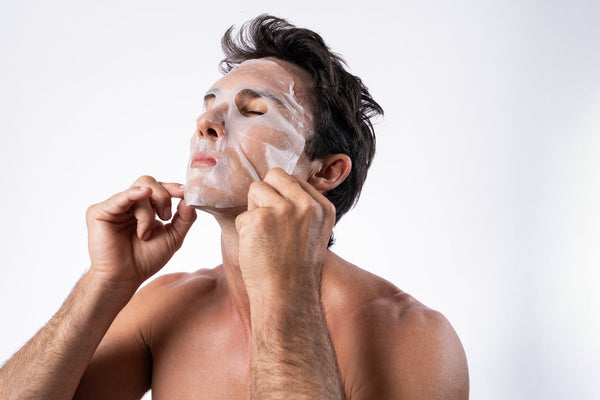
While at-home LED masks utilise the same wavelengths as clinical devices, they typically offer lower power densities (irradiance). Professional panels used in Australian clinics are often medical-grade devices that deliver higher energy levels over shorter durations, ensuring more consistent penetration through the dermal layers [7]. However, at-home devices can be effective for maintenance, provided the user ensures the mask has sufficient bulbs and makes direct contact with the skin to minimise light scatter [3].
How long does it take to see visible results from LED therapy?
Results from LED therapy are cumulative rather than instantaneous. For acne, a reduction in inflammatory lesions can often be observed within 2 to 4 weeks of twice-weekly sessions [1]. Collagen production, however, is a slower biological process; clinical studies generally show that significant improvements in skin elasticity and fine lines require 8 to 12 weeks of consistent treatment, as the skin cycle and collagen maturation process take time to manifest visually [4].
Are there any side effects or risks associated with LED light therapy?
LED therapy is generally considered safe for all skin types (Fitzpatrick I-VI) as it does not contain harmful ultraviolet (UV) radiation. However, eye protection is essential, particularly with high-intensity blue light, to prevent potential retinal damage [8]. Individuals taking photosensitising medications (such as certain antibiotics or Roaccutane) should consult a healthcare professional before use, as their skin may be hyper-reactive to the light energy [2].
References:
[1] Gold MH, et al. Journal of Clinical and Aesthetic Dermatology. 2009;2(3):44-48. doi:10.12788/j.sder.2016.035
[2] Papageorgiou P, et al. British Journal of Dermatology. 2000;142(5):973-978. doi:10.1046/j.1365-2133.2000.03481.x
[3] Avci P, et al. Seminars in Cutaneous Medicine and Surgery. 2013;32(1):18-35. PMC3926176
[4] Wunsch A and Matuschka K. Photomedicine and Laser Surgery. 2014;32(2):93-100. doi:10.1089/pho.2013.3616
[5] Huang YY, et al. Dose-Response. 2009;7(4):358-383. doi:10.2203/dose-response.09-027.Hamblin
[6] Ablon G. Journal of Clinical and Aesthetic Dermatology. 2018;11(2):21-27. PMC5844488
[7] Jagdeo J, et al. Journal of the American Academy of Dermatology. 2018;79(3):528-535. doi:10.1016/j.jaad.2018.04.046
[8] Tosini G, et al. Molecular Vision. 2016;22:61-72. PMC4734870
Medical Disclaimer: This article is for educational purposes only and does not constitute medical advice. Always consult a qualified healthcare professional before starting any new skincare regimen. Content reviewed by a biomedical scientist.