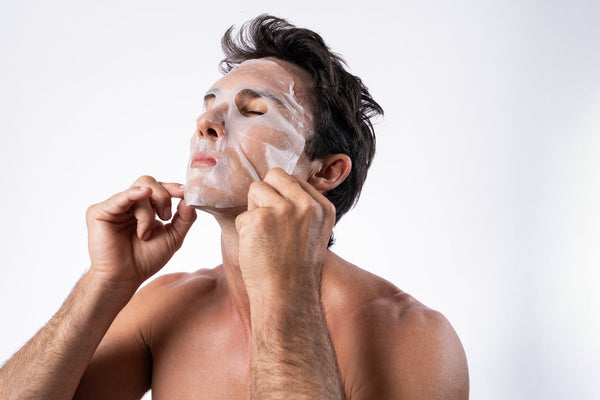
Vitamin C serum, primarily in the form of L-ascorbic acid, functions as a potent antioxidant that neutralises reactive oxygen species (ROS) generated by ultraviolet radiation and environmental pollutants. By donating electrons to unstable free radicals, it prevents oxidative stress that leads to cellular damage and premature photoageing [1]. Beyond its protective role, Vitamin C is an essential cofactor for the enzymes prolyl hydroxylase and lysyl hydroxylase, which are responsible for stabilising and cross-linking collagen fibres. Regular application stimulates fibroblasts to increase collagen synthesis, resulting in improved skin firmness and a reduction in fine lines [2].
Additionally, Vitamin C acts as a depigmenting agent by interacting with copper ions at the tyrosinase active site. This inhibits the action of the enzyme tyrosinase, which is the rate-limiting step in melanin production. Consequently, it helps to diminish hyperpigmentation, even out skin tone, and enhance overall radiance without affecting normal skin colouration [3]. Because humans lack the enzyme L-gulono-gamma-lactone oxidase required for endogenous Vitamin C synthesis, topical application is a critical method for maintaining high concentrations within the dermis and epidermis [1].
Topical delivery of Vitamin C is a significant challenge in formulation science due to its hydrophilic nature and inherent instability. L-ascorbic acid is highly susceptible to oxidation when exposed to light, air, and high pH levels. To ensure cutaneous absorption, a serum must typically be formulated at a pH below 3.5 to neutralise the molecule's charge, allowing it to bypass the stratum corneum [4]. Research suggests that a concentration between 10% and 20% provides the optimal balance between efficacy and potential irritation [1].
Clinical studies have demonstrated that Vitamin C works synergistically with other antioxidants, most notably Vitamin E (alpha-tocopherol) and Ferulic acid. While Vitamin C acts in the aqueous compartments of the cell, Vitamin E protects the lipid membranes. Ferulic acid serves to stabilise the formulation and doubles the photoprotective capacity of the Vitamin C and E combination, providing a superior biological defence against UV-induced erythema and thymine dimer formation [5].
For those looking to integrate these benefits into a daily ritual, our C-Veil Citrine Tonic was formulated with Ascorbic Acid to support a brighter, more radiant complexion while providing a foundation of lightweight hydration. To further enhance this glow and minimise the appearance of ageing, some of our customers find that layering the tonic with Cellular Thread helps maintain firmness through a specialised blend of peptides and antioxidant-rich Kakadu Plum.
FAQ
When is the best time to apply Vitamin C serum?
While Vitamin C can be used twice daily, it is most beneficial when applied in the morning. This timing leverages its antioxidant properties to neutralise free radicals generated by UV light and pollution throughout the day. Evidence suggests that once absorbed, Vitamin C cannot be washed or sweated off and maintains a 'reservoir effect' in the skin for up to 72 hours [1][4].
Can Vitamin C be used with Retinol?
Yes, but they are often best used at different times of the day due to varying pH requirements. Vitamin C requires an acidic environment (pH < 3.5), whereas Retinol functions best at a more neutral pH. Using Vitamin C in the morning provides daytime protection, while Retinol is ideally suited for nighttime repair, as it is light-sensitive and promotes cell turnover [2][6].
How can you tell if a Vitamin C serum has gone bad?
Vitamin C is highly prone to oxidation. If a serum changes colour from clear or pale straw to a dark yellow, orange, or brown, it indicates that the L-ascorbic acid has oxidised into dehydroascorbic acid. In this state, the serum loses its antioxidant efficacy and may potentially cause irritation or pro-oxidant effects on the skin [4][5].
References:
[1] Telang PS. Vitamin C in dermatology. Indian Dermatol Online J. 2013;4(2):143-146. doi:10.4103/2229-5178.110593
[2] Pullar JM, Carr AC, Vissers MCM. The Roles of Vitamin C in Skin Health. Nutrients. 2017;9(8):866. doi:10.3390/nu9080866
[3] Ando H, et al. Approaches to the treatment of melanogenesis. J Cosmet Sci. 2007;58(5):571-587.
[4] Pinnell SR, et al. Topical L-ascorbic acid: percutaneous absorption studies. Dermatol Surg. 2001;27(2):137-142. doi:10.1046/j.1524-4725.2001.00264.x
[5] Lin FH, et al. Ferulic acid stabilizes a solution of vitamins C and E and doubles its photoprotection of skin. J Invest Dermatol. 2005;125(4):826-832. doi:10.1111/j.0022-202X.2005.23760.x
[6] Zasada M, Budzisz E. Retinoids: active molecules influencing skin structure formation in cosmetic and dermatological treatments. Postepy Dermatol Alergol. 2019;36(4):392-397. doi:10.5114/ada.2019.87443
Medical Disclaimer: This article is for educational purposes only and does not constitute medical advice. Always consult a qualified healthcare professional before starting any new skincare regimen. Content reviewed by a biomedical scientist.