Skin flaking under makeup is primarily driven by a compromised stratum corneum, the skin's outermost layer. When the skin barrier is damaged or dehydrated, corneocytes (dead skin cells) do not desquamate—or shed—uniformly. Instead, they cluster in micro-scales that remain attached to the surface. When makeup, particularly matte or long-wear foundations containing high pigment loads and volatile solvents, is applied, these pigments settle into the crevices of the uneven scales, magnifying their appearance and making the skin look flaky [1][2].
Furthermore, the phenomenon is exacerbated by 'pilling', which occurs when the emollients or polymers in your skincare do not properly absorb and instead interact negatively with the resins in your makeup. If your moisturiser contains heavy silicone oils and your foundation is water-based, the lack of miscibility causes the products to ball up, mimicking the appearance of dry, peeling skin even if the underlying tissue is hydrated [3]. In the Australian climate, high UV exposure can further degrade the lipid matrix between skin cells, leading to increased transepidermal water loss (TEWL) and a brittle surface texture [4].
From a dermatological perspective, the cohesion of the stratum corneum is regulated by enzymes called kallikrein-related peptidases, which require specific pH levels and hydration to function. When the skin is dry, these enzymes fail to break down the desmosomes holding cells together, leading to abnormal shedding patterns known as hyperkeratosis [1][5].
Additionally, the rheology of cosmetic formulations plays a critical role. The 'film-forming' agents in modern makeup are designed to create a smooth layer, but if the substrate (the skin) is chemically incompatible or physically uneven due to poor desquamation, the film fractures under tension, resulting in the visible ‘lifting’ of product and skin cells [2].
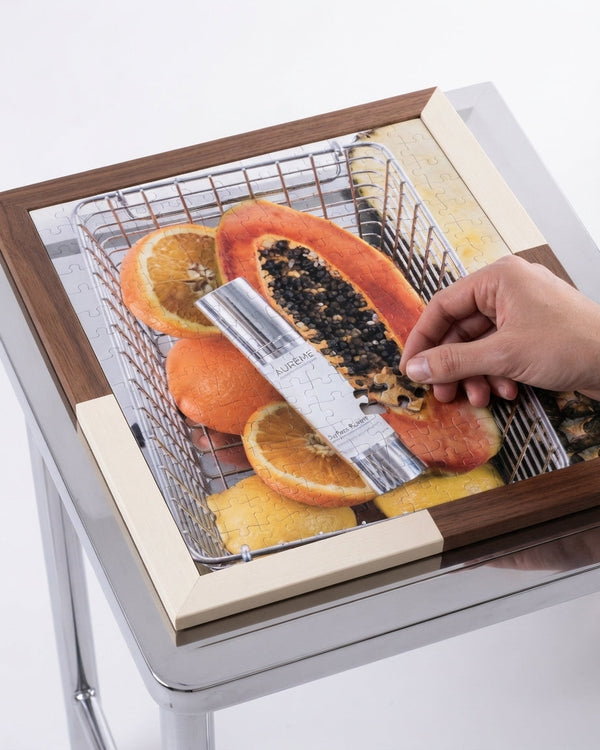
To encourage a more uniform texture and minimise the appearance of micro-scales, incorporating a gentle exfoliant like Surface Renew can help facilitate the shedding of dead skin cells through its blend of fruit enzymes and AHAs. Following this with a lipid-rich moisturiser such as Cellular Crème may further assist in sealing the skin barrier, providing the necessary suppleness to ensure makeup glides over the surface rather than clinging to dry patches.
FAQ
Can certain active ingredients make flaking worse?
Yes, retinoids and hydroxy acids (AHAs/BHAs) increase cellular turnover and can initially cause 'retinoid dermatitis'. This process temporarily thins the stratum corneum and increases sensitivity, making the skin more prone to flaking when mechanical friction is applied during makeup application [5][6].
Does the order of product application matter?
Crucially. Applying foundation before your moisturiser has fully 'fixed' or evaporated its volatile components can lead to interfacial instability. Forcing a pigment-heavy layer over an unstable emollient film leads to the uneven distribution of solids, which appears as flaking [3]. Wait at least 60 seconds between layers to allow for proper film formation.
How does the Australian environment contribute to this?
Low humidity and high UV indices common in Australia accelerate the evaporation of surface moisture. This creates a 'hyer-osmotic' stress on skin cells, causing them to shrink and curl at the edges—a process called 'cupping'—which creates a rough texture that makeup fails to cover smoothly [4][7].
References:
[1] Rawlings AV, et al. Stratum corneum moisturization at the molecular level. Journal of Investigative Dermatology. 1994;103(5):731-741. doi:10.1111/1523-1747.ep12398620.
[2] Loden M. Role of topical emollients and moisturizers in the treatment of dry skin barrier disorders. American Journal of Clinical Dermatology. 2003;4(11):771-788. doi:10.2165/00128071-200304110-00005.
[3] Braddy A, et al. Interfacial science in cosmetic chemistry: pigment and polymer interactions. International Journal of Cosmetic Science. 2018;40(2):112-125. doi:10.1111/ics.12450.
[4] Passeron T, et al. Clinical and biological impact of the exposome on the skin. Journal of the European Academy of Dermatology and Venereology. 2020;34(S4):4-11. doi:10.1111/jdv.16614.
[5] Egelrud T. Desquamation in the stratum corneum. Acta Dermato-Venereologica. 2000;80(211):9-12. doi:10.1080/000155500750012460.
[6] Mukherjee S, et al. Retinoids in the treatment of skin aging: an overview of clinical efficacy and safety. Clinical Interventions in Aging. 2006;1(4):327-348. doi:10.2147/ciia.2006.1.4.327.
[7] Watson REB, et al. Damage to skin by sun exposure: the role of the environment. British Journal of Dermatology. 2014;171(S2):14-23. doi:10.1111/bjd.13264.
Medical Disclaimer: This article is for educational purposes only and does not constitute medical advice. Always consult a qualified healthcare professional before starting any new skincare regimen. Content reviewed by a biomedical scientist.